NFL Betting Payment Methods in the UK: What Has Changed Since 2024
 Available in US

The way UK punters fund their NFL betting accounts has changed more in the past three years than in the previous fifteen. Credit card deposits have been banned. Open banking has emerged as a serious deposit method. E-wallet share has shifted as licensing requirements tightened. Affordability checks have changed who actually completes a deposit attempt versus who abandons one mid-flow. UK online gambling pulls roughly 290 million monthly bets, with 95% of UK online gambling activity originating from home, and the deposit infrastructure underlying all of that volume is meaningfully different from what it was in 2022. Understanding the current payment landscape is part of operating intelligently in the regulated UK NFL market.
Debit Cards: The Default That Still Works
Debit cards remain the default deposit method for UK NFL bettors at virtually every licensed operator, and the structural reasons are simple. The deposit is processed instantly, the funds become available for staking within seconds of completion, and the underlying mechanics integrate cleanly with the operator’s account-management infrastructure. For most UK punters opening a new NFL betting account, the debit card route is the path of least friction, and the operator’s back-end systems are most thoroughly integrated with the major UK card networks.
The structural change since 2020 is that credit cards are no longer a permitted gambling deposit method in the UK regulated market. The Gambling Commission banned credit card use for gambling in April 2020, and the prohibition has held firmly through the regulatory reforms that followed. UK NFL bettors attempting to use a credit card for gambling deposits at a licensed operator will have the transaction declined regardless of operator preference, because the prohibition operates at the card-network level rather than at the operator level. The practical consequence is that any UK punter still accustomed to credit card use for online entertainment products needs to understand that gambling sits in a separate regulatory category.
The withdrawal side of debit card payments has improved meaningfully through 2024 and 2025. Most major UK operators now process debit card withdrawals within 24 hours, with several offering same-day or instant withdrawal to debit cards through Faster Payments integration. The historical complaint about UK gambling withdrawals – that they took three to five business days regardless of deposit speed – has been substantially addressed by operators investing in withdrawal infrastructure to compete on the consumer experience side rather than purely on odds and promotional offers.
E-Wallets: The Shift in Provider Mix
E-wallets retain a significant share of UK gambling deposits, particularly among more experienced punters and among bettors who maintain accounts at multiple operators. The structural advantage is that an e-wallet allows centralised management of gambling spend across multiple sportsbooks, with deposit and withdrawal transactions visible in a single statement rather than spread across multiple banking entries.
The provider mix in UK gambling e-wallets has shifted meaningfully since 2023. Skrill and Neteller – historically the dominant e-wallet brands in UK gambling – remain in the market but have been joined by additional providers that have specifically targeted the regulated UK gambling vertical. PayPal continues to operate at major UK operators, with the structural caveat that PayPal’s own internal gambling-merchant policies sometimes limit availability for certain operators or transaction types.
For UK NFL bettors the practical e-wallet considerations are deposit speed (universally instant), withdrawal speed (typically 4-24 hours), promotional eligibility (some sign-up offers exclude e-wallet deposits as a fraud-prevention measure), and the underlying account verification requirements (e-wallets impose their own KYC checks separate from the operator’s, which can occasionally create friction at first deposit). The mobile-first nature of UK gambling – with mobile devices accounting for roughly 78% of global online betting activity in 2024 and 76% of UK 18-24 year olds using mobile for gambling – means that e-wallet integrations need to be optimised for mobile flow, and the operators that have invested in this integration well show measurably lower abandonment rates at deposit.
Open Banking: The Genuinely New Method
Open banking has emerged as a genuinely new UK gambling deposit method through 2024 and into 2026, and it represents the most structurally different addition to the deposit menu since debit cards became standard. The mechanic is direct bank-account-to-operator transfer, authorised through the punter’s own banking app via PSD2 open-banking infrastructure, settling within seconds and bypassing card networks entirely.
For UK NFL bettors the structural advantages of open banking are speed (genuinely instant in most flows), cost (no card-network fees, which means operators occasionally pass through reduced friction or marginal promotional incentives), and integration with the punter’s own banking environment (transactions appear directly in the bank statement, simplifying personal record-keeping). The major UK operators have rolled out open banking deposit options through 2024-2025, with availability expanding through 2026 as the underlying infrastructure matures.
The trade-off is that open banking deposits do not always qualify for sign-up bonuses or promotional offers at the same rate as debit card deposits, because the operator’s back-end fraud-prevention systems treat the methods differently. UK punters claiming new-customer offers should verify their preferred deposit method’s eligibility before committing to the flow, because a deposit that arrives via an excluded payment method can void the qualifying conditions for the promotion.
Friction, Affordability and the Account-Level Controls
The deposit experience in UK gambling is not purely a payment-method question. It is also a structural intersection with the regulated market’s affordability and player-protection framework, and that framework has evolved meaningfully through 2024 and 2025.
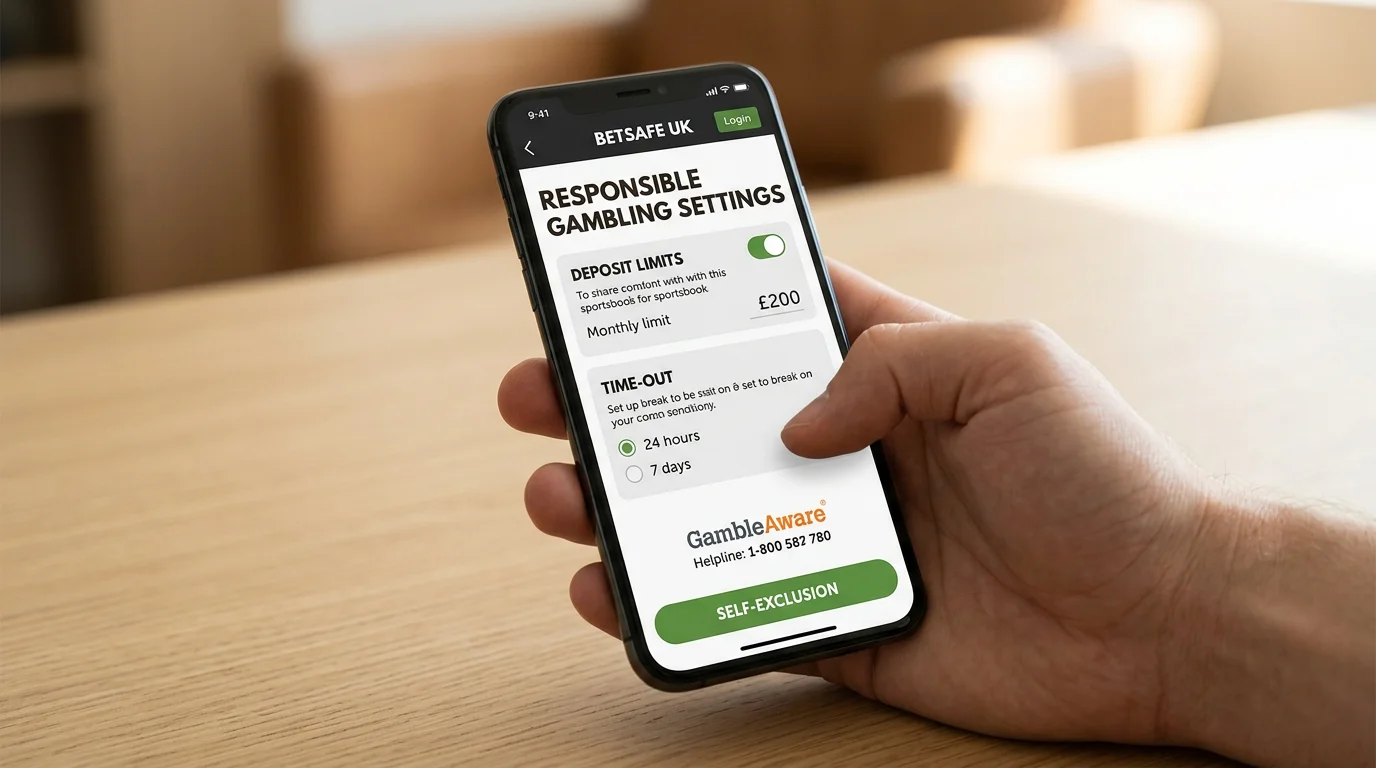
The mandatory deposit-limit prompt – required at every UK gambling account from 31 October 2025 – is the most visible recent change. Every UK operator must now actively prompt new account holders to set deposit limits before the account becomes fully operational, and the prompt cannot be skipped or default-dismissed. For UK NFL bettors this means the first deposit experience now includes an explicit budget-setting step that did not exist in the same form previously, and the limit set at this point applies across all subsequent deposit activity until the punter actively changes it.
The financial risk assessment framework – covering the upper-tier of UK gambling spend – has been calibrated through extensive UKGC piloting. Tim Miller, summarising the pilot data, noted that “vulnerable customers were two to four times more likely than the rest of the population to have had a defaulted account, debt management plan, bankruptcy or insolvency in the previous twelve months.” That data shaped the structural design of the assessment framework, which now applies to less than 3% of accounts and produces frictionless processing for 97% of bettors. For UK NFL punters the operational reality is that occasional checks may be applied at higher deposit volumes, with less than 0.1% of bettors ever encountering them in practice.
The combined effect of these controls is that the deposit flow at a UK-licensed operator now embeds more consumer protection than at any previous point in the regulated market’s history. Some UK punters experience this as additional friction, particularly during account opening. Others experience it as appropriate guardrails that make the betting environment more sustainable across long-term participation. Both perspectives are mathematically defensible. The structural reality is that the protections exist, they apply uniformly across licensed operators, and they constitute the regulatory cost of the licensed environment compared to unregulated alternatives.
The Withdrawal Experience and What It Actually Tells You
Withdrawal speed and reliability are the underrated performance indicators of UK gambling operators, and the cross-operator variance in withdrawal experience is meaningfully larger than the cross-operator variance in deposit experience. UK NFL punters who care about the operational quality of their gambling accounts should weight withdrawal performance heavily in their operator selection, because the structural patterns are reasonably stable and predictive of broader operator quality.
The major UK operators with the regulated market share concentrated among the top operators that report quarterly to the UKGC have generally invested in withdrawal infrastructure as a competitive feature. Same-day withdrawals are increasingly standard, instant withdrawals via Faster Payments are emerging, and the historical experience of three-to-five-business-day waits has substantially disappeared at the leading licensees. Smaller operators sometimes lag on this dimension and the lag is observable in their customer-feedback profiles.
For UK NFL bettors operating across multiple operators for line-shopping purposes – covered in detail in my piece on cross-operator price comparison – the withdrawal performance differential affects the practical economics of running a multi-operator strategy. An operator with reliable same-day withdrawals enables faster bankroll redeployment than an operator with three-day withdrawal lags, and across a full NFL season the cumulative effect on capital efficiency is material.
Building a Payment Stack That Works for the Season
For UK NFL punters approaching the 2025-26 season with intentional payment-stack design, the operational framework reduces to a few principles. Use debit cards as the default deposit method for sign-up offers and standard transactions, because the qualifying-criteria coverage is broadest. Maintain at least one e-wallet – Skrill, PayPal or equivalent – for cross-operator visibility and centralised statement management. Adopt open banking for high-frequency deposit activity where the speed and cost advantages compound across many transactions. And recognise that the deposit-limit prompt at account opening is an opportunity to set season-long structural caps rather than a regulatory hurdle to be minimised.
For the broader account-level framework that contextualises how payment-method choices integrate with responsible gambling tools and player protection mechanics, my analysis at responsible gambling tools for NFL bettors covers the wider control architecture that surrounds every payment decision in the UK regulated market. Payment methods are one component of an integrated account-management framework, and the framework as a whole is meaningfully different from what it was three years ago.
The UK gambling deposit and withdrawal landscape will continue to evolve through 2026 and 2027 as open banking matures, as the regulated market’s player-protection framework completes its current implementation phase, and as operators adjust their consumer-facing infrastructure to the cost pressures from the 2026-27 RGD increase to 40% and the 2027 GBD remote rate increase to 25%. The £810m projected fiscal contribution in 2026-27 rising to £1.16bn by 2030-31 represents a meaningful operator cost shift that will affect deposit-method economics in ways not yet fully visible in the consumer-facing product.
For UK NFL bettors the practical consequence is that staying loosely current on payment-method developments – without obsessing over them – is part of operating in the regulated market intelligently. The deposit choices made at account opening shape the operational experience across an entire season, and small structural advantages compound across seventeen weeks of regular season plus playoffs into meaningful cumulative differences in the practical experience of betting NFL in the UK.
Can UK NFL bettors use credit cards at any licensed operator?
No. The Gambling Commission’s credit card prohibition, in force since April 2020, applies to all gambling activity at all UK-licensed operators regardless of the operator’s individual preference. The prohibition is enforced at the card-network level as well as at the operator level, which means that even if a UK punter attempted to use a credit card via an intermediary or e-wallet route to fund a gambling deposit, the underlying transaction will typically be declined or treated as a cash-advance equivalent. UK NFL bettors should plan their deposit strategy around debit cards, e-wallets and open banking exclusively. Any UK gambling website that accepts credit cards is operating outside the licensed regulatory framework, which is the broader category of unregulated operators that UK punters should avoid for both legal and consumer-protection reasons.
Is open banking faster than e-wallet for UK NFL betting deposits?
In direct deposit speed terms, both methods are effectively instant for the punter – funds become available for staking within seconds at the major UK operators. The structural difference sits in the underlying infrastructure. Open banking transfers funds directly from the punter’s bank account through PSD2 protocols, which means the transaction settles in the punter’s bank statement immediately and bypasses card-network fees. E-wallets pre-fund a separate balance which then transfers to the operator, which can introduce a brief delay if the e-wallet itself is being topped up at the same time. For most UK NFL bettors the practical experience is essentially identical, but for high-volume bettors managing multiple operator accounts, open banking’s direct settlement and statement clarity offer a structural advantage that compounds across many transactions during a full NFL season.
Prepared by the nfl Betting Markets editorial staff.