NFL Cash Out Rules at UK Sportsbooks
 Available in US
What cash-out actually does to your equity
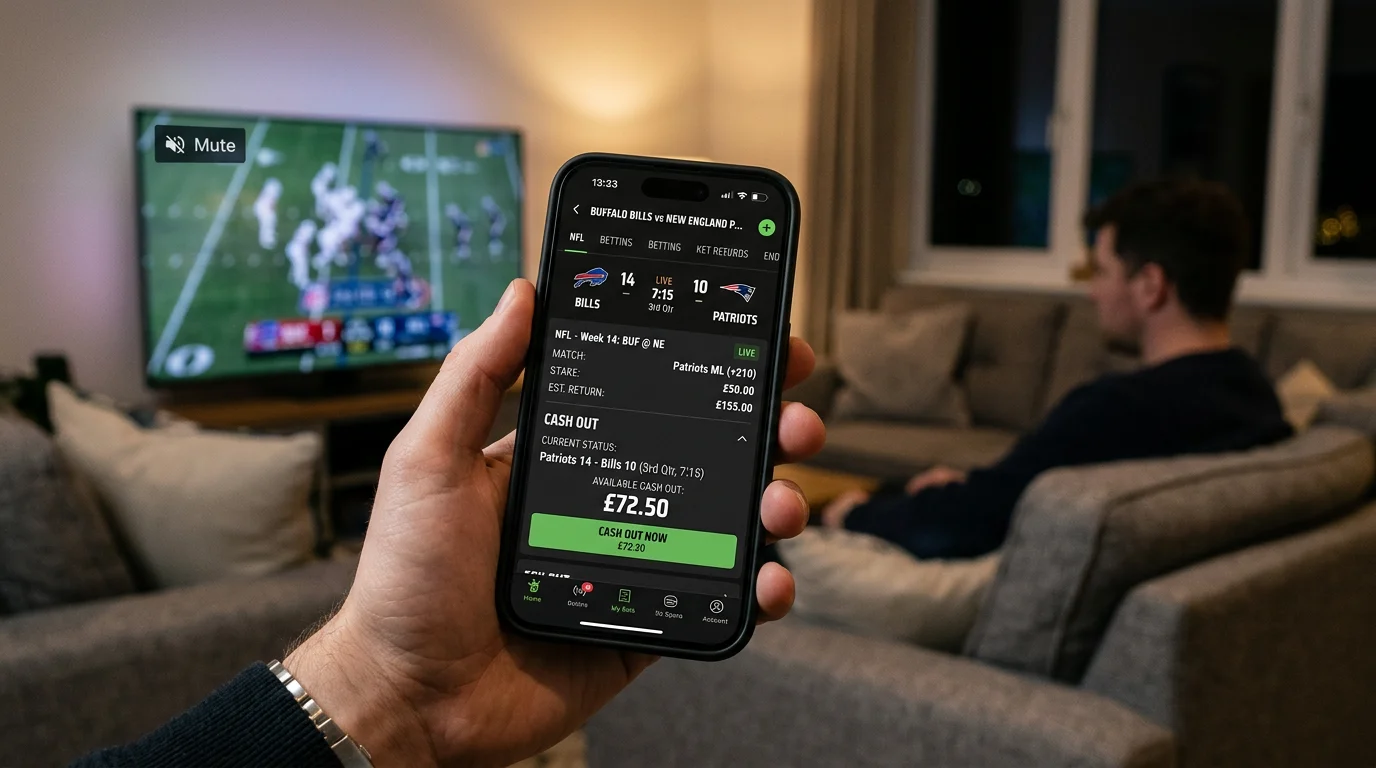
The first time I cashed out an NFL slip for less than I “should” have made, I sat with the receipt for ten minutes trying to work out where the missing money had gone. The bet had ticked into a winning position, the cash-out button glowed green, I tapped it for a quick exit before the fourth quarter tightened, and the payout came in a comfortable thirty percent below the implied equity of my original ticket. That gap is not a glitch. It is the price the operator charges for early certainty, and understanding it is the difference between cash-out as a tool and cash-out as a tax.
Live betting now accounts for over 62 percent of global online sports betting volume, and cash-out is the most-used feature inside that live ecosystem. It looks like a courtesy – a button that lets you take some money off the table mid-game – but it is a market in its own right, with the same vig and the same operator margin embedded in the price. Every cash-out figure you see on screen has been adjusted downward from the raw probability-implied value to leave the book a small profit on the conversion.
This guide is about reading cash-out for what it is, not what it appears to be. The mechanics work differently across singles, multiples and built bets. Partial cash-out has its own logic. Auto cash-out has its own pitfalls. And there are specific game states in which UK books disable the feature entirely, leaving you to ride the bet to its natural conclusion. By the end you should be able to look at any cash-out offer mid-game and decide whether it is a fair deal or a discount sale of your equity back to the operator.
Cash-out on singles vs multiples vs built bets
Singles are the cleanest case. You backed the spread at -3 with the favourite, the favourite is now leading by ten in the third quarter, the cash-out offer reflects the current probability of the favourite covering. The book runs its in-play model, generates an implied probability of cover, multiplies by your potential payout, and subtracts its margin. The figure on the screen is your real cash-out value, and the discount versus a “fair” calculation is typically four to seven percent on a UK-licensed operator.
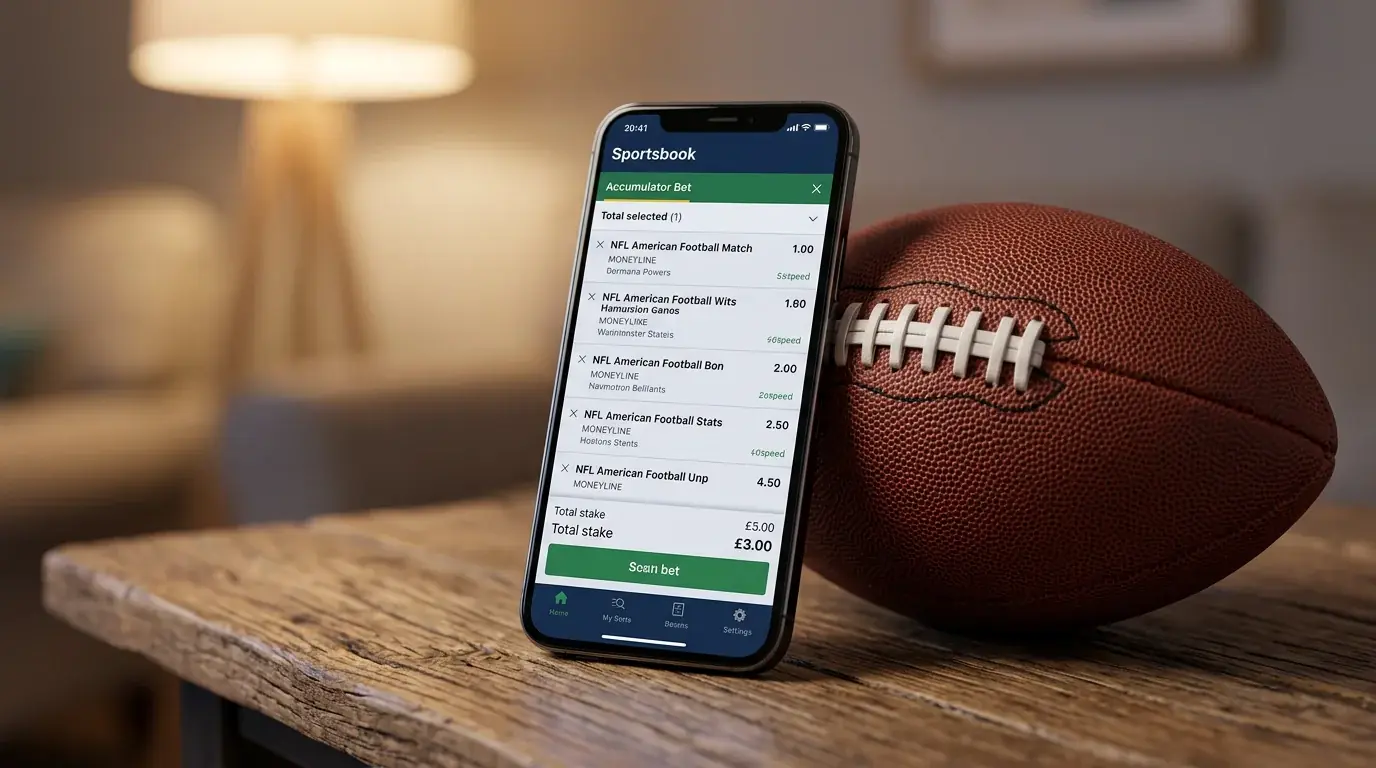
Multiples are where the maths gets harder to follow without a calculator. A four-leg accumulator with three legs already settled and one leg pending in a current NFL fixture has a cash-out value tied entirely to the live probability of that pending leg. A four-leg accumulator with all four legs pending in active NFL games is calculated as a joint probability across all four legs, with the operator’s margin compounded on each. The discount on a four-leg multi cash-out frequently runs ten to fifteen percent below fair value – meaningful enough that taking the cash-out on a healthy multi is rarely the right play unless you have a strong external reason to exit.
Built bets are the hardest. A bet builder combining a moneyline leg, a spread leg and two prop legs from the same fixture has correlated outcomes, and books price the cash-out using their internal correlation matrix rather than the simple product of leg probabilities. The output is opaque to the punter and almost always tilted in the operator’s favour. I treat built-bet cash-out offers with strong scepticism unless the figure is materially close to my own back-of-envelope probability calculation, which it rarely is.
One tell that a cash-out price is fairer than usual: when the offered figure on a single moneyline bet sits within two or three percent of what your own implied-probability estimate suggests, the operator is effectively only taking its standard margin and the deal is reasonable. When the gap stretches past five percent on a single, the book has either suspended its main model or is taking advantage of a state where it expects sharp customers not to be watching. Either way, the price is not the right one for you to take.
Partial cash-out: locking in part of the slip
Partial cash-out is one of the most useful tools UK books have rolled out, and it is also the one most often misused. The mechanic is simple: instead of converting the entire bet to cash, you cash out a portion – say half – and leave the remainder live. The slip splits into a settled portion and a still-running portion, and the still-running portion settles on the original bet’s outcome at the original odds, just at a smaller stake.
The right way to use partial cash-out is on slips where you want to lock a guaranteed return while preserving upside. A four-team NFL acca with three legs already won and one fourth-quarter leg pending is the canonical case. Cashing half locks in a known profit. The remaining half rides for the full multi-leg payout. If the fourth leg wins, you collect both portions. If it loses, you keep the cashed-out half. Your variance is reduced; your expected value is also reduced, but only by the operator’s margin on the cashed portion.
The wrong way to use partial cash-out is as a hedging tool on a single bet. Cashing half of a healthy single trims your edge without genuinely protecting you, because the single is already a clean win-or-lose proposition with known variance. The maths almost always favours either riding the bet fully or cashing out fully. Splitting the difference on a single just hands the operator margin on the cashed portion without giving you a meaningful structural benefit.
One trap with partial cash-out: some UK books will move the cash-out value on the remaining portion as the game progresses, but with a wider margin spread because the operator is now pricing a smaller-stake position less competitively. If you cash out half and watch the price on the remaining half drift, do not assume you are seeing a pure probability move. You may be seeing a probability move plus a widening margin, and the implied terms of the remaining half can be worse than the terms of the original whole.
Auto cash-out triggers and pitfalls
Auto cash-out is the feature where you set a target value, and the slip cashes automatically the moment the cash-out figure reaches your threshold. It sounds clean. In practice, it has two pitfalls that bite UK punters every season.
The first pitfall is volatility around the trigger. NFL cash-out values can swing twenty percent in a single play. A long touchdown completion that flips the spread from likely-cover to likely-loss will move your cash-out figure faster than the auto-trigger can react cleanly. Some operators settle the auto cash-out at the exact threshold value; others settle at the value at the moment the operator’s system processes the trigger, which can be marginally lower. Reading the small print on which approach your book uses matters more than punters realise.
The second pitfall is the suspension state. If the market is suspended at the moment the auto-trigger fires – typical during a coach’s challenge, an injury timeout, or a major scoring play – the auto cash-out does not execute until the market reopens. By the time it does, the cash-out value has often moved away from your target in either direction. Some books will honour the original target; others will execute at the new value. This varies by operator and is the single most common source of post-game complaints I see in UK NFL punter forums.
The way I use auto cash-out is sparingly and only for late-game protection on slips I cannot watch in real time. Setting a target that is comfortably above my breakeven, leaving headroom for normal volatility, and accepting that the slip will execute somewhere in the neighbourhood of my target rather than exactly at it. Treating auto cash-out as a precise hedging instrument is a mistake; treating it as a rough exit valve on slips you have to leave running is sensible.
When books disable cash-out and why
UK books disable cash-out in three classic situations, and each one tells you something useful about how the operator is reading the live state. The first is during major scoring plays under review – a touchdown being checked by replay, a turnover under booth review. The book’s underlying probability model cannot finalise until the call is confirmed, so cash-out goes dark for thirty seconds to two minutes.
The second is during fast in-play sequences when the operator’s pricing engine cannot keep up. A two-minute drill with rapid plays, big yardage swings and clock management can spike the operator’s repricing load past its real-time threshold, and rather than offer a stale cash-out value the book suspends the feature. This is when the underlying technology – Genius Sports’ BetVision and similar low-latency products that combine streaming with integrated bet slips – really matters, because operators using more advanced live infrastructure suspend less often and reopen faster.
The third is during games where a specific market is at high risk of mispricing – late-season fixtures with confused starting line-ups, weather-affected games where models lose confidence, niche prop markets that thin out as the game progresses. Some UK books disable cash-out on individual legs of a built bet while leaving cash-out available on others, which produces strange offers where part of your slip is live-priceable and part is not.
The reading is straightforward: when cash-out goes dark, the operator does not trust its own pricing. That is sometimes a moment to wait, because reopening prices are typically more honest than the suspended state. It is sometimes a moment to accept that you will have to ride the slip out to settlement. Either way, fighting against a disabled cash-out is rarely productive – the book will not reopen the feature until its model is confident again.
For the bigger picture on bankroll discipline that interacts with cash-out decisions, my guide to NFL bankroll management walks through how cash-out fits into a UK punter’s broader staking plan. The short version: cash-out should be used to manage variance against your bankroll, not to optimise EV. Anyone using cash-out as an EV tool is fighting the operator’s margin head-on and losing more often than they win.
How to read a cash-out offer in real time
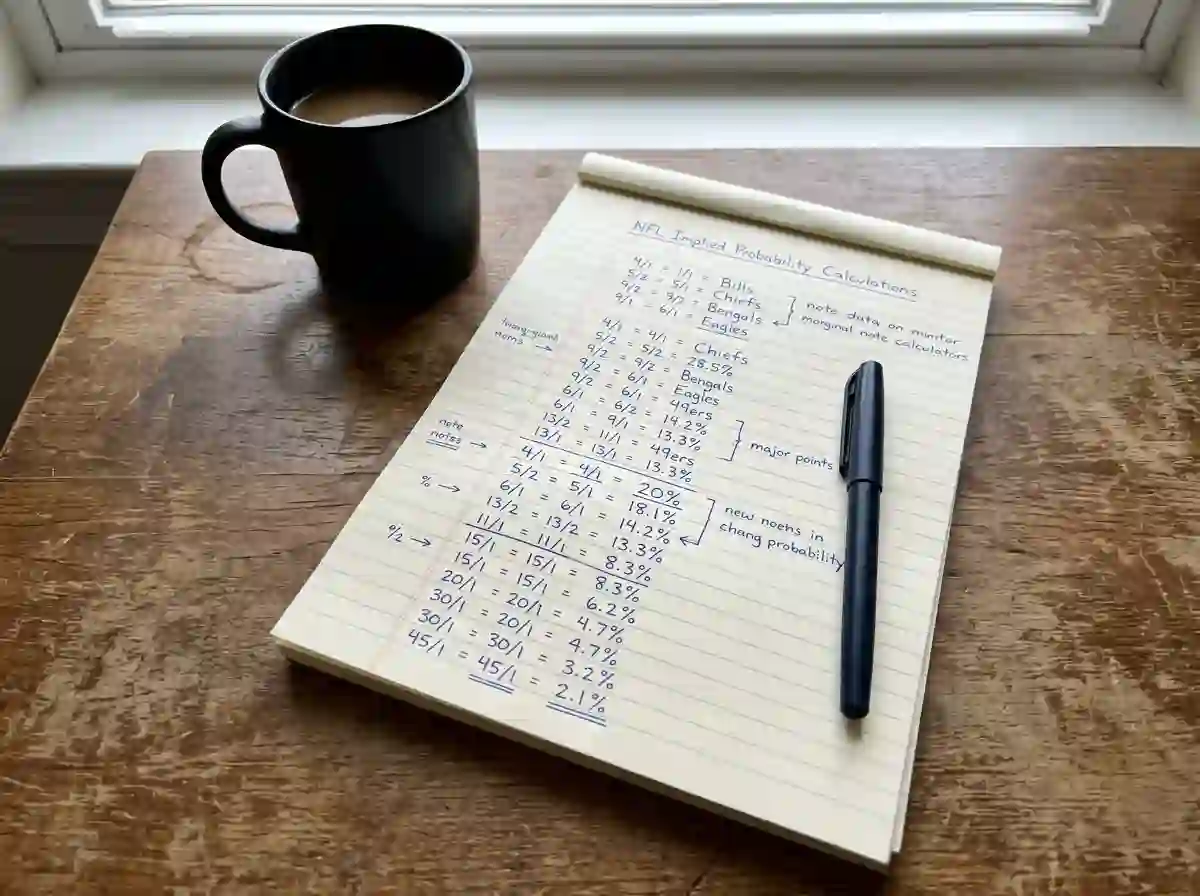
The thirty-second discipline I use on every cash-out decision is straightforward. Estimate the implied probability of the bet still winning. Multiply by your potential payout. Compare that figure to the cash-out offer on screen. If the gap is narrow – within five percent on a single, ten percent on a multi – the deal is fair. If the gap is wide, the operator is asking you to pay for early certainty at a price that is not in your favour.
Cash-out is a useful tool. It is not a free one. UK punters who treat it as a courtesy from the operator end up converting healthy slips into mediocre payouts. UK punters who treat it as a market with its own price and its own margin make better decisions about when to use it and when to ride. The cash-out button is always there. The question is whether the price behind it is one you would take if you saw it as a fresh bet – and most of the time, the answer is no.
Is cash-out available on NFL futures?
Some UK books offer cash-out on outright NFL futures like Super Bowl winner or division winner, but the spread between cash-out value and implied equity is typically wider than for in-play game markets. The reason is liquidity – futures move slowly and the operator runs a heavier margin on the conversion. Cash-out on a healthy futures position is rarely the right play.
Why is the cash-out value lower than the implied equity?
The operator embeds its margin in the cash-out price the same way it embeds margin in the original odds. A typical cash-out discount runs four to seven percent on a single in-play bet and ten to fifteen percent on a multi-leg accumulator. The discount is the price the punter pays for early certainty rather than waiting for natural settlement.
Written by the editors at nfl Betting Markets.