UK Gambling Tax Changes for 2026 and 2027: A Bettor’s Read
 Available in US
What changes, when and to whom
The Autumn Budget 2025 quietly redrew the UK gambling tax map for the rest of the decade. Two specific duties – Remote Gaming Duty and General Betting Duty on remote betting – are being raised in two staggered steps over 2026 and 2027. Combined, the changes are projected to raise an additional £810 million in the 2026 to 2027 financial year and £1.16 billion by 2030 to 2031. That is not a marginal adjustment. It is the largest reshaping of operator-side gambling taxation since the 2014 introduction of the point-of-consumption regime.
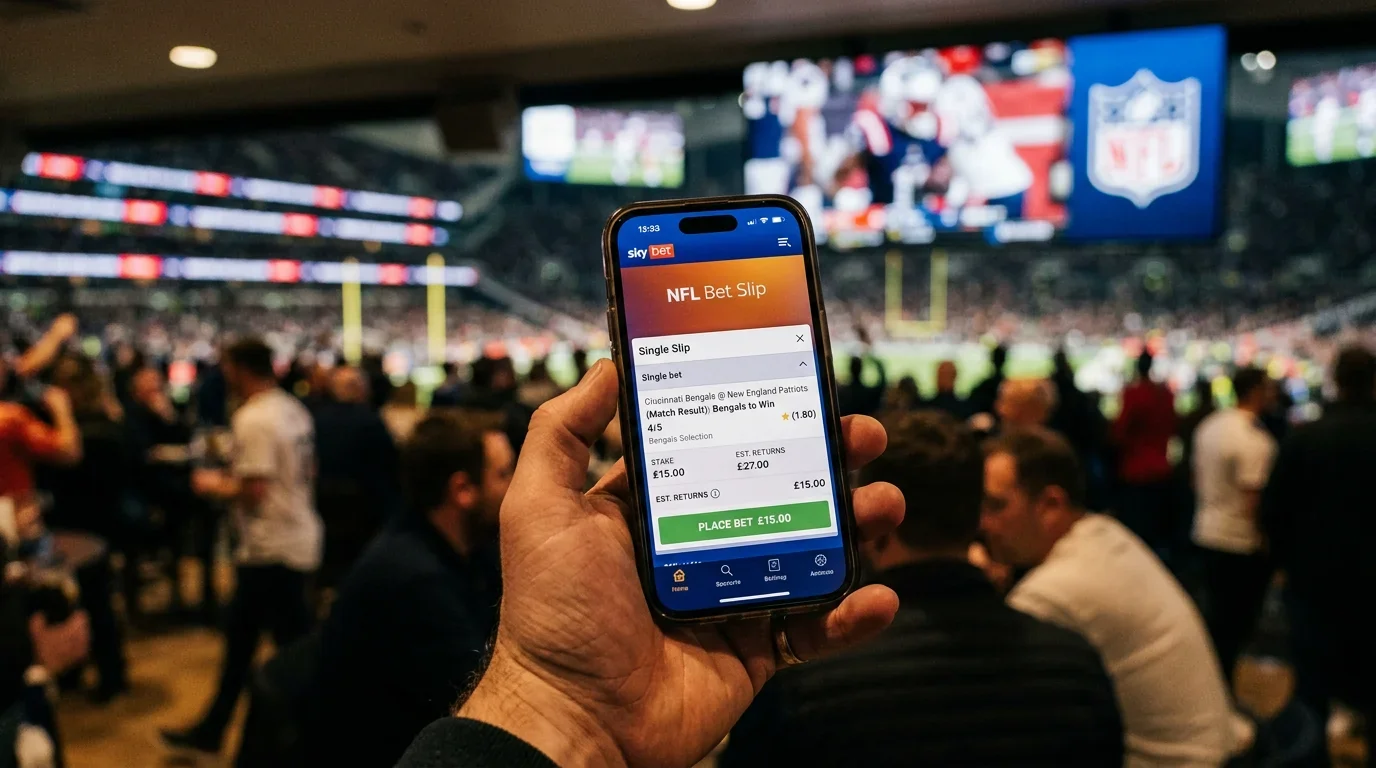
NFL bettors reading the headlines may not have spotted that the changes hit the betting product they actually use. RGD targets remote casino-style gaming. GBD on remote betting targets sportsbook fixed-odds betting – including every NFL spread, moneyline, total and prop you place at a UKGC-licensed operator. The two-step timeline matters because it lands during the most aggressive UK NFL expansion in the league’s history, and the cumulative operator-side cost will shape what the betting product looks like by the time the 2027 to 2028 NFL season opens.
Sky Sports’ three-year extension already adds roughly 50 percent more live NFL matches on UK screens. Channel 5 has come on as a free-to-air partner. Paddy Power holds the Official UK and Ireland NFL Sportsbook Partner mantle through 2025/26. NFL betting volume is climbing in step with that distribution surge – and the operator-side tax bill is climbing alongside it. This guide walks through the two duty changes, the horseracing carve-out, and the practical knock-on effects UK NFL bettors should expect to see at the line.
Remote Gaming Duty: 21% to 40% from April 2026
The first increase is the larger one. Remote Gaming Duty, which applies to remote casino games and gaming, rises from 21 percent of gross gambling yield to 40 percent on 1 April 2026. The doubling is not gradual. It hits in a single step at the start of the 2026 to 2027 tax year, and operators have known about it since the Autumn Budget 2025 announcement gave the industry roughly five months of lead time to absorb it.
RGD does not directly tax NFL betting – it taxes online slots, casino games and similar gaming-style products. But operators run their NFL sportsbooks alongside their casino verticals, and the increase reshapes the internal economics of the businesses that offer NFL betting in the UK. A multi-product operator whose casino arm now pays double the duty has less margin to subsidise the sportsbook side, which historically has been a lower-margin product than gaming. The cross-subsidy that funded aggressive sportsbook promotions over the past decade tightens.
The visible effect on NFL bettors is indirect but real. Welcome bonuses tied to multi-product offers – sportsbook plus casino – disappear after January 2026 anyway under the separate mixed-product promotion ban. RGD-driven margin compression then tightens the remaining sportsbook-only promotions in the months after April. Operators do not advertise the cause. They advertise the effect, which is a less generous welcome offer, a slimmer reload bonus, and fewer high-margin price boosts on novelty markets.
The political dynamic around RGD is worth tracking. The industry argued during consultation that doubling the rate would push casino-style activity into the offshore black market, which contributes nothing in tax. The Treasury accepted some of that argument – the increase landed at 40 percent rather than the 50 percent floated in some pre-Budget speculation – but rejected the broader case. The 40 percent figure is the durable rate, not a temporary one, and operators have built it into their multi-year planning.
General Betting Duty remote: 15% to 25% from April 2027
The second increase is the one that hits NFL betting directly. General Betting Duty on remote betting – the duty paid on every fixed-odds bet placed online with a UK-licensed sportsbook – rises from 15 percent of GGY to 25 percent on 1 April 2027. That is a 67 percent increase in the rate. It applies to NFL spreads, moneylines, totals, props, futures, in-play and built bets at every UKGC-licensed operator offering remote betting to UK customers.
The arithmetic for operators is brutal. A sportsbook running a 7 percent gross margin on its NFL handle currently pays 15 percent of that margin in GBD, leaving roughly 5.95 percent net. Under the 25 percent rate, the same gross margin nets 5.25 percent. Across an annual NFL handle of several hundred million pounds, that is tens of millions of pounds in net margin compression – money that has to come from somewhere if the sportsbook is to remain profitable.
It comes from three places, in order of likelihood. First, a marginal tightening of the odds on the most-bet markets. Second, a reduction in promotional spend – fewer free bets, smaller welcome offers, narrower price boosts. Third, a quieter trim of cash-out generosity, with the operator’s margin on cash-out conversions widening fractionally to recover some of the duty cost. None of these is dramatic. All of them are real, and the cumulative effect across a 2027 to 2028 NFL season is likely to be visible to attentive UK punters.
The implementation date matters. April 2027 falls between NFL seasons, which gives operators a clean cycle to reset their pricing models for the new tax regime before the 2027 to 2028 season opens in September. Expect to see the visible operator-side adjustments in late summer 2027, in the run-up to the new season, rather than mid-season changes that would draw more punter attention.
Why UK horseracing keeps the 15% rate
The carve-out that defines the politics of the 2025 Budget is the horseracing exemption. UK horseracing remains at the 15 percent General Betting Duty rate. Online NFL betting jumps to 25 percent. The asymmetry is deliberate – a recognition that horseracing is a domestic industry with deep employment links, while online sports betting on US sports is taxed at a higher rate because the cultural and economic footprint of those sports inside the UK is narrower.
The British Horseracing Authority lobbied hard for the carve-out and got it. The argument was that horseracing supports 85,000 livelihoods directly, and a tax increase on online horserace betting would have flowed through to the racing economy in ways that would have been politically and economically damaging. The Treasury accepted the case. The Budget speech included the racing exemption explicitly, and the BHA’s response welcomed the decision as sparing a vulnerable industry.
The carve-out has knock-on implications for NFL betting. Operators with a strong racing book can cross-subsidise their NFL product from a tax-favoured racing arm. Operators without a meaningful racing arm – newer entrants, US-focused books – face the full 25 percent on their entire remote betting GGY without offsetting headroom. The competitive pressure will widen the gap between the long-established UK books with diverse product mixes and the newer entrants whose UK presence is concentrated in US sports.
For the UK NFL punter, this competitive asymmetry shows up as price differentiation. Established multi-product books are more likely to maintain promotional generosity through the tax change. Specialist US-sport books are more likely to tighten visibly. Tracking which operator absorbs the change cleanly versus which operator passes it through to the customer is one of the most useful exercises a UK NFL punter can do across the 2027 to 2028 transition window.
Knock-on effects for NFL prices and promotions
Three specific effects to watch through the 2026 and 2027 transition. First, the welcome bonus market – already reshaped by the January 2026 mixed-product promo ban and the 10x wagering cap – will tighten further as RGD compression bites. Expect headline welcome figures to hold roughly steady but the small print to harden. Wagering requirements may sit at the cap. Free-bet stake-not-returned rules may apply more stringently. Conversion rates from welcome bet to retained customer will be tracked more aggressively by operators with less margin to play with.
Second, the prop market – the highest-margin part of the NFL product – will see selective margin tightening. Anytime touchdown scorer markets, the most-staked NFL prop, will compress slightly on the chalk side and widen marginally on the long-shot side, as books defend their margin where the public money sits. Yardage props will see similar adjustments. The casual UK punter who bets the same handful of named players each week will absorb the change without noticing. The line-shopper who pulls prices across multiple books will see the gap widen.
Third, the in-play market – already the largest single segment of the betting volume at over 60 percent of global online sports betting share – will see operator margins on cash-out tighten by a fractional but consistent amount. The cash-out discount versus implied equity, which currently runs four to seven percent on a single in-play bet, may drift toward six to nine percent on the same bet under the post-2027 regime. That is the single most likely punter-facing effect of the tax bundle, and the one most attentive bettors will notice first.
For the parallel funding-side change that pairs with the tax increases, the statutory gambling levy guide walks through the smaller but earlier-implemented 0.1 to 1.1 percent GGY levy. The levy and the duty changes together form the full picture of how the UK gambling regulatory environment is reshaping itself across this decade, and reading them in isolation misses the cumulative effect.
The bettor’s playbook through 2026 and 2027
The discipline through the transition is straightforward. Maintain your existing line-shopping habit. Track which operators tighten visibly versus which absorb the changes cleanly. Reset your expectations on welcome offers – the headline numbers will look smaller than the 2025 norm, and the small print will be tighter. Treat in-play cash-out values with marginally increased scepticism after April 2027. And recognise that the licensed UK market remains the safest place to bet, even as the operator-side cost of running that market climbs.
The temptation through tax-rise transitions is to migrate to offshore alternatives. The temptation is also exactly what the BGC warned about during consultation – and the consequences for the punter are real. Offshore books offer no consumer protection, no UKGC oversight, no recourse if the operator stalls a withdrawal or invents a settlement dispute. The 2026 and 2027 tax changes make UK-licensed betting marginally more expensive in operator-margin terms; they do not make it less safe. That distinction is worth keeping in the front of your mind through the next two seasons.
Will UK punters pay more on NFL winnings after 2026?
No. UK gambling winnings remain untaxed at the punter level – the duty is paid by the operator on gross gambling yield, not by the bettor on individual wins. The headline price you see on an NFL bet is the price you collect on a winning settlement, with no withholding tax.
Does General Betting Duty apply to bet builders?
Yes. GBD on remote betting applies to all fixed-odds betting placed with a UKGC-licensed remote operator, including bet builders, same-game multiples and accumulators. The duty is calculated on operator gross gambling yield from those products, and the operator-side cost is part of why bet builders carry higher margins than singles at most UK books.
Published by the nfl Betting Markets team.