NFL Free Bets and UK New-Customer Offers: What the New Rules Actually Mean
 Available in US
I have probably read several thousand sets of free-bet terms and conditions across my career, and I can tell you with complete certainty that 19 January 2026 was the day they finally got readable. That date marked the activation of the UK Gambling Commission’s 10x wagering cap and the ban on mixed-product promotions, and the changes have rewritten what NFL new-customer offers in the UK look like in practice. The marketing copy has not changed much. The mechanics absolutely have. UK NFL punters who want to extract genuine value from sign-up offers in the 2025-26 season need to understand what the new rules permit, what they prohibit, and where the genuine edges still sit.
The 10x Wagering Cap and What It Killed
From 19 January 2026 the UKGC capped wagering requirements on UK gambling promotions at ten times the bonus value. That sounds technical. The practical consequence is that the deeply punishing 35x and 50x rollover requirements that used to sit at the bottom of UK promotional terms are gone. A £20 free bet that previously required £700 of turnover before withdrawal can now demand no more than £200. For an NFL bettor placing weekend stakes through a typical 17-week season, that turns a previously unattainable promotion into something genuinely clearable.
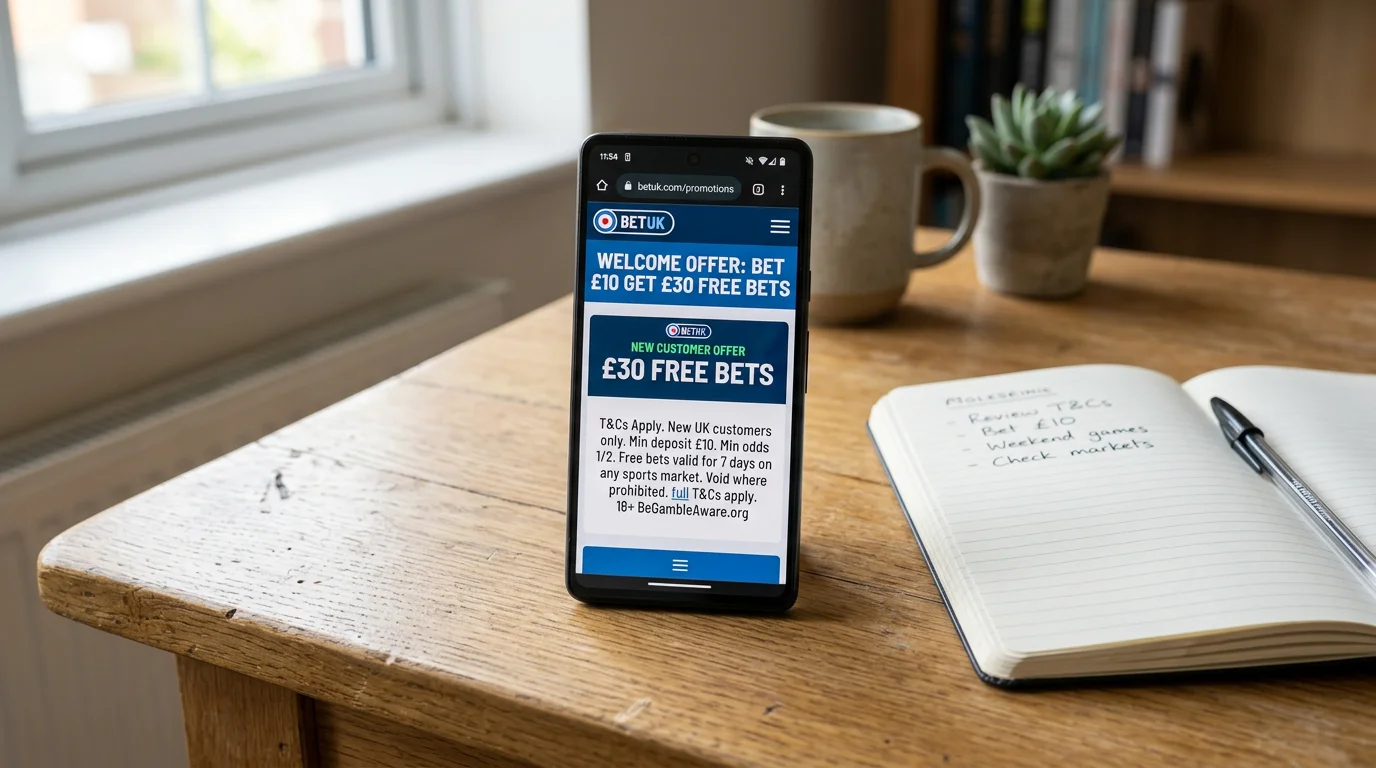
The cap applies to the bonus amount, not the deposit. A “deposit £10 get £30 in free bets” offer is governed by the £30 figure for wagering purposes, with a maximum requirement of £300 in qualifying turnover. Operators have responded predictably: some have lowered the headline bonus value to keep their net margin where it was; others have moved to “bet £10 get £10” structures with cleaner mechanics; a smaller subset have leaned harder into free-to-play products like the Paddy Power “NFL Showdown” pick-em game that runs alongside their UK and Ireland NFL sportsbook partnership.
The cap also applies to free-bet stake returns. Operators can no longer require that a free bet be wagered through multiple times before any winnings convert to withdrawable cash. Stake-not-returned remains the norm – meaning a winning £20 free bet at evens returns £20 of profit, not £40 – but the resulting profit is now treated as cash subject to the standard 10x cap rather than being recycled indefinitely through nested rollover.
The Mixed-Product Promotion Ban
The same January 2026 reform banned promotions that combine separate gambling products. The classic example was the “free spins on a slot when you place a sports bet” offer – the punter places a £10 NFL acca, and the operator pays out 50 free spins on a casino product whether the acca lands or not. UK operators ran versions of this structure for years because it cross-pollinated their sportsbook database into their casino vertical, which generally carries higher operator margins.
For UK NFL bettors that style of offer no longer exists. A new-customer NFL promotion now has to deliver the value through sportsbook mechanics – free bets, odds boosts, accumulator insurance, profit boosts – rather than through cross-vertical incentives. The visible effect on a punter scrolling through a sign-up page is fewer noisy boxes promising spins, bingo cards or casino chips alongside the NFL offer. The structural effect is that what you see on the sportsbook landing page is what you get, with no hidden value being parked in a casino product you have no intention of touching.
Operators with multiple verticals have adjusted by running fully separate promotional tracks. Their NFL-facing sign-up flow now lives entirely within the sportsbook. Their casino sign-up flow lives entirely within the casino. The two databases still exist on the same licensee, but the promotional architecture is segregated in a way that mirrors the regulatory boundary.
Comparing What Is Still on the Table
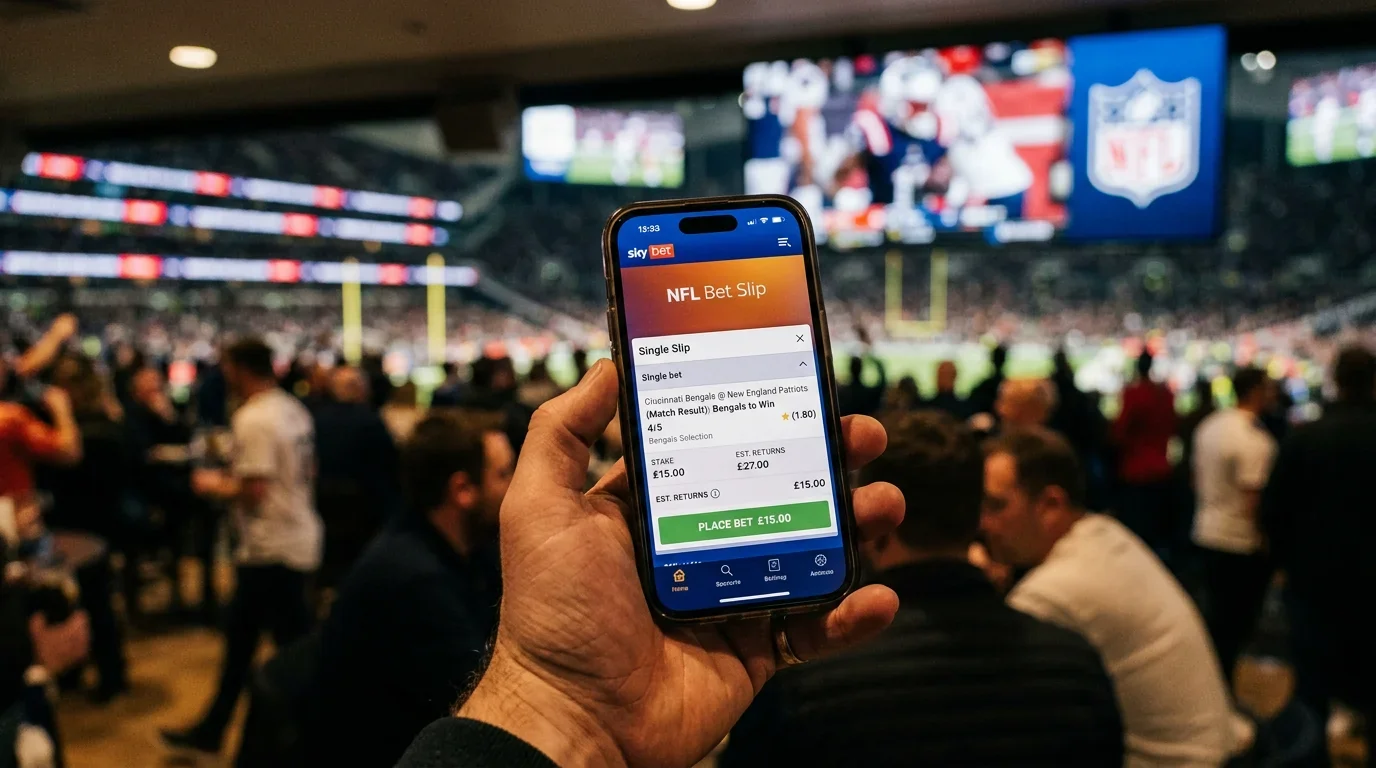
Within the new framework, NFL new-customer offers in the UK now cluster around three structures. The first is the matched free bet – typically “bet £10 get £20” or “bet £10 get £10” – where a qualifying first wager triggers a free-bet credit. The second is the no-deposit free bet, which is rarer post-reform because the economics tightened, but a few operators still run small-value versions to capture sign-ups around the Super Bowl. The third is the odds-boost token, which credits a one-time boost on a selection of the punter’s choice, typically capped at a maximum stake.
For NFL specifically the matched free-bet structure is the most useful, because the typical NFL betting menu – moneyline, spread, totals, anytime touchdown scorer – fits the standard “minimum odds 1/2” or “minimum odds evens” qualifying clause without contortion. Football and horseracing free bets often run into qualifying-odds friction; NFL markets generally do not. UK remote betting GGY runs at roughly £2.6bn with football accounting for £1.3bn, which gives you a sense of where operators concentrate their promotional spend, but the marginal cost to extend the same mechanic to NFL is essentially zero, and most major operators do.
The branded NFL-specific promotions remain where the genuine edges sit. William Hill’s “Drive 55” mechanic – a 15% free-bet bonus on moneyline or handicap stakes if a game finishes with 55 or more combined points – is a structural promotion rather than a sign-up offer, but it stacks with new-customer credit. BetUK’s “17+ Early Payout” – paying out moneyline bets if your team leads by 17 or more at any point – is similarly a standing promotion that compounds with sign-up value. A punter combining a sign-up free bet with one of these branded structural offers in their first NFL Sunday is extracting more expected value than the headline figure suggests.
The Mistakes That Cost UK Punters Their Sign-Up Value
Most lost sign-up value comes from three errors I see repeatedly when reviewing reader forms.
The first is staking the qualifying bet at minimum odds. The terms typically require minimum odds of 1/2 (1.5 in decimal) or evens (2.0 decimal), and the temptation is to find the safest available selection at exactly that floor. The maths argues the other way. Because the qualifying bet itself produces expected value broadly equal to the operator’s hold percentage on the relevant market, a smaller-stake qualifying bet at slightly higher odds typically beats a maximum-stake qualifying bet at the floor. The free bet credit is the same either way, so minimising what you risk to unlock it is the rational choice.
The second is failing to use the free bet on a high-variance market. Stake-not-returned mechanics mean a free bet’s expected value increases with the odds of the selection. A £20 free bet on an evens shot returns £20 in profit when it wins, with a 50% strike rate – so its expected value is about £10. The same £20 staked on a 4/1 shot returns £80 in profit when it wins, and a 20% strike rate yields an expected value of £16. For NFL specifically, anytime touchdown scorer markets and player props in the 3/1 to 5/1 range are typically the optimal homes for a free-bet stake.
The third is failing to clear within the promotional window. UK new-customer offers carry expiry dates – usually 7, 14 or 30 days from credit. NFL bettors who sign up mid-week and intend to wait for the weekend slate sometimes lose offers that expire before they get to use them. Most large UK operators with the regulated market share concentrated among the top operators that report quarterly to the UKGC have moved towards 30-day windows post-reform, but smaller licensees still run shorter expiries. Reading the clause is a thirty-second exercise that pays for itself.
What the Reform Means for the Average UK NFL Punter
The honest summary is that UK NFL new-customer offers are now smaller in headline value than they were two years ago, but the value that does exist is genuine and clearable rather than theatrical. The 10x wagering cap and mixed-product ban have done the work that consumer-protection bodies had been asking for since the start of the decade, and the operator response has been to consolidate rather than to disappear. There is less promotional noise on a sign-up page. The remaining numbers mean what they say.
For a UK NFL bettor opening a first account in advance of the 2025-26 regular season, the practical sequence is straightforward. Read the qualifying-odds clause. Confirm the wagering requirement is at or below the 10x cap. Note the expiry window and place the qualifying stake within the first week. Save the free-bet credit for a higher-variance NFL selection rather than a safe favourite. And cross-check whether the operator runs a branded NFL promotion – Drive 55, 17+ Early Payout, or similar – that compounds with the sign-up structure.
For an existing UK punter wondering whether sign-up value is worth chasing across multiple operators, the maths still works. The 10x cap has reduced the effort required to clear each individual offer, which has the side effect of improving the time-adjusted return on running a small panel of accounts for line-shopping purposes. My internal benchmark across the operators I monitor sits at roughly £40 to £60 of clearable sign-up value per account post-reform, which compares with £30 to £80 of theoretical value pre-reform once the unattainable wagering requirements are honestly modelled. The ceiling is lower. The floor is much higher. For most NFL bettors that is the better trade.
The broader point is that UK regulation has, over the past eighteen months, moved sign-up promotions from a marketing arms race into something closer to a genuine consumer offer. That is good for the market. It is also good for the bettor who has the patience to read the terms, place the qualifying stake intelligently, and deploy the free-bet credit on selections where its expected value is meaningfully positive. For a deeper view on how to integrate sign-up value into a structured staking framework, my analysis at UK gambling tax changes 2026-2027 covers how the operator economics underneath these promotions are likely to shift again.
Where the Edge Sits in 2025-26
The edge in UK NFL new-customer offers no longer sits in finding the highest headline number. It sits in matching the structural mechanics to the NFL betting menu. Free bets paired with anytime touchdown scorer markets. Odds boosts deployed on player prop selections where the boost moves the price meaningfully closer to fair. Branded promotions like Drive 55 and 17+ Early Payout layered on top of new-customer credit. None of this is hidden. All of it requires reading what is actually on the page rather than skimming the headline.
The reform has done UK punters a favour they may not yet have fully appreciated. The promotions are smaller, cleaner and more honest than they have ever been in the regulated market’s history, and the operators that have leaned into the new framework are building product offers that work better for the bettor. For the 2025-26 NFL season, treating sign-up value as a small but genuine input into a season’s staking plan – rather than as a marketing claim to be discounted – is the realistic posture for a UK NFL punter who wants to operate in the regulated market intelligently.
Can a UK NFL free bet be cashed out before the game ends?
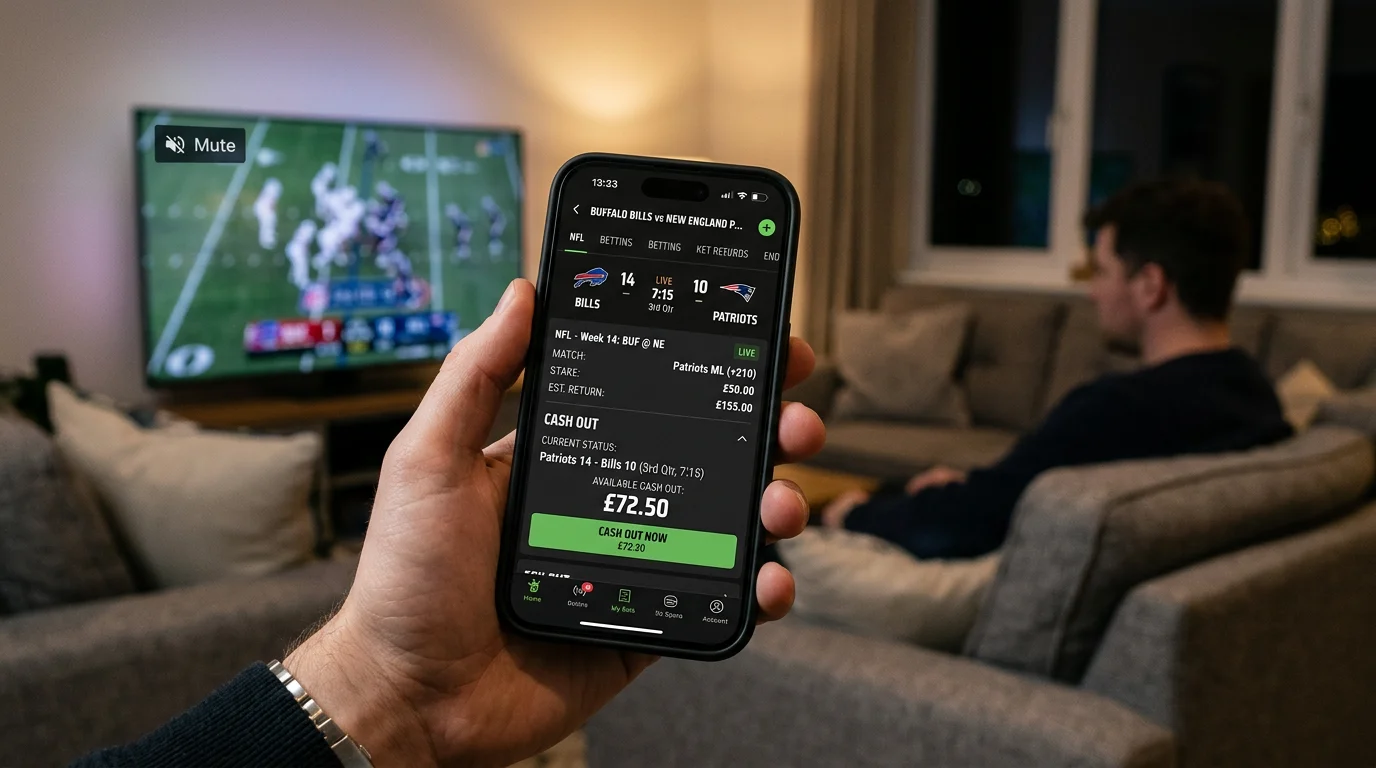
Generally no. Free bets in the UK regulated market are settled at the conclusion of the qualifying event, and most operators exclude free-bet stakes from cash-out functionality. A handful of larger licensees offer partial cash-out on free bets where the original selection was a multi-leg market and one or more legs have already settled, but the standard mechanic is that the free bet runs to its natural conclusion. Always confirm the specific operator’s terms before placing the qualifying stake, as cash-out exclusions are typically buried in the promotional terms rather than in the main cash-out help page.
Are NFL free bet offers in the UK smaller than equivalent football offers?
On headline value, NFL offers from major UK licensees are usually within the same range as football offers – typically a £20 to £40 matched free bet against a £10 qualifying stake. The difference sits in the qualifying-market constraints. Football offers often restrict eligibility to specific competitions or to a minimum-odds threshold that reflects the football betting menu. NFL offers tend to apply the same minimum-odds floor across all NFL markets, which makes them mechanically easier to qualify against. The branded NFL promotions like Drive 55 and 17+ Early Payout do not have direct football equivalents at most operators, which means an NFL-focused punter combining sign-up value with branded structural offers is often extracting more total promotional value than an equivalent football punter.
Written by the editors at nfl Betting Markets.