The UK Statutory Gambling Levy and What It Means for NFL Bettors
 Available in US
What the levy replaces and why it matters
For two decades, the UK gambling industry funded research, education and treatment through a voluntary contribution model. Operators paid roughly 0.1 percent of their gross gambling yield to GambleAware and a handful of associated charities – voluntarily, with no legal teeth behind the figure. That arrangement ended on 6 April 2025, when the Gambling Levy Regulations 2025 made the contribution statutory, banded by GGY size, and routed through the public funding system rather than charity intermediaries. The first invoices landed on operators on 1 September 2025 with payment due by 1 October.
NFL bettors in the UK are reading those headlines from a confused angle, and I get it. Most coverage frames the levy as an operator cost or a regulatory squeeze. What it actually is, from the punter side, is a structural change to where harm-reduction funding comes from and who controls it. The voluntary model is dead. The statutory model is alive. The numbers behind it are larger, the accountability is sharper, and the implications for how the betting product is shaped over the next decade are real.
The reason this matters specifically to NFL bettors is timing. The 2025/26 NFL season opened just as the first statutory levy invoices hit operator desks, and the 2026/27 season will open under a regulatory regime where the levy revenue is funding direct interventions in harm reduction. UK punters betting NFL through licensed sportsbooks are participating in the largest restructuring of gambling-industry public funding the country has seen in two decades, and most of them have no idea it is happening.
How the 0.1-1.1% GGY levy is calculated
The mechanic is banded. Operators pay a percentage of their gross gambling yield, with the percentage scaling by operator size. The smallest licensees pay 0.1 percent. The largest pay 1.1 percent. The thresholds were set to ensure that the burden falls disproportionately on the largest operators while keeping smaller niche books viable, and the band structure produces a predictable annual revenue flow into the public purse.
UK industry GGY across the customer-facing gambling sector ran at £12.6 billion in the 2024 to 2025 financial year, up 9.3 percent year-on-year. Apply the levy bands across that base and the total revenue collected sits comfortably in the £100 million range – which lines up with the Hansard projections used in the consultation phase. The number sounds modest in industry context but it is a step-change in funding scale for harm reduction relative to the old voluntary model.
The operator side of the calculation matters because it shapes how the cost is absorbed. The largest operators paying 1.1 percent of GGY have absorbed levy costs into their internal financial models without passing them visibly through to the customer. Smaller niche books at 0.1 percent have minimal impact. The middle tier – operators with NFL-specific verticals but smaller overall scale – sits in a band where the levy is meaningful but not crippling, and where any pass-through to the customer is most likely to show up as marginal pricing tightness rather than visible price increases.
For a UK NFL bettor, the practical reading is that the levy is not a tax on your bet. You do not see a line item on your slip. The cost sits at the operator level, and any punter-facing effect comes through indirectly via slightly tighter overall margins or modestly trimmed promotional spend.
The April 2025-October 2025 timeline
The implementation calendar was deliberately staggered. The Gambling Levy Regulations 2025 came into force on 6 April 2025, marking the legal birth of the new system. Through the spring and summer, operators worked through their first GGY reporting cycle under the new regime. The first statutory invoices were issued on 1 September 2025, with a one-month payment window closing on 1 October. By 1 October, every UKGC-licensed operator with material UK GGY had either paid or been flagged for non-compliance.
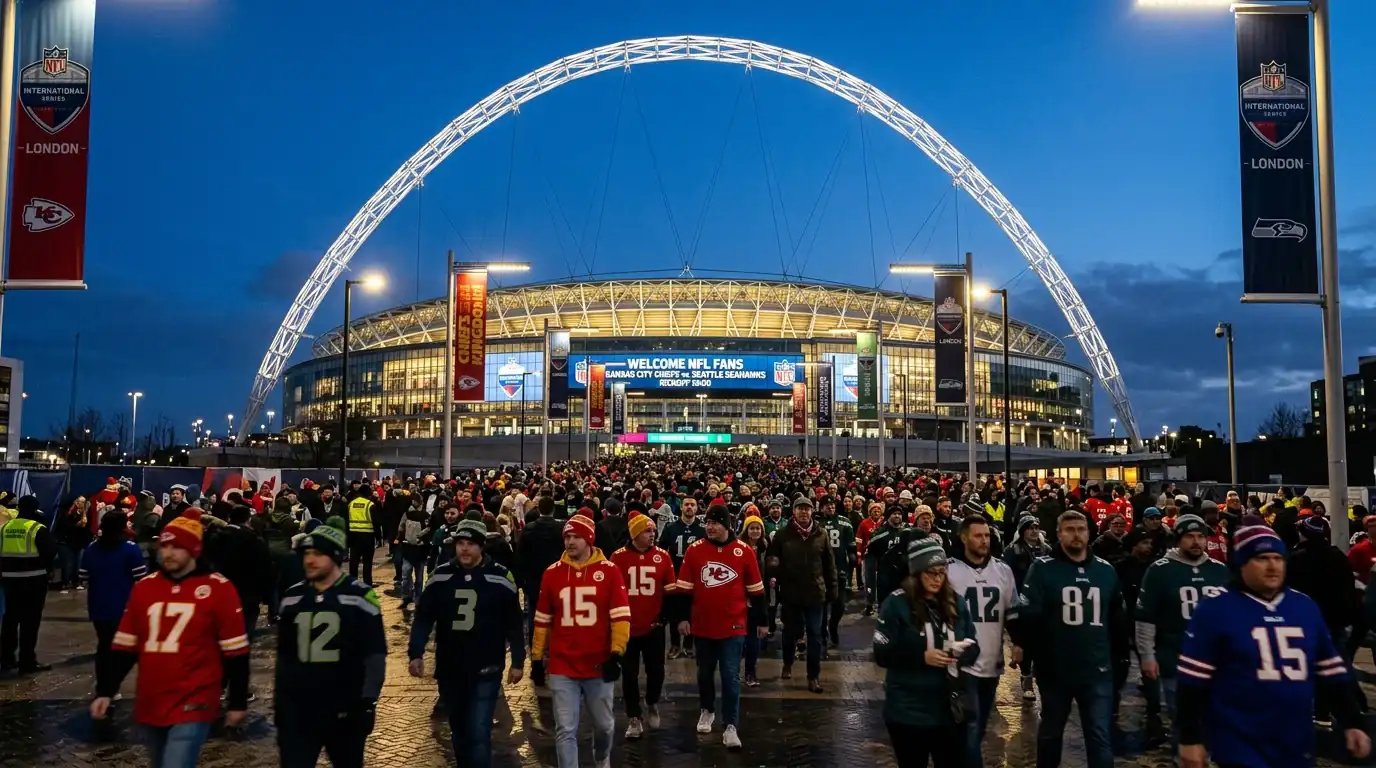
That October deadline matters to NFL bettors because it falls exactly in the middle of the International Games window. The 2025 London and Dublin fixtures were running across late September and through October, and the operator-side cash flow demands of the first levy invoice arrived during peak NFL betting volume. Operators that had budgeted appropriately absorbed the cost cleanly. Operators that had under-budgeted faced a brief liquidity squeeze that occasionally showed up as tightened in-play markets and reduced promotional offers.
“Britain has one of the safest gambling markets in Europe,” Grainne Hurst said during the consultation period, “but if the Treasury isn’t careful, we could quickly end up like France or Sweden, with huge black markets contributing nothing in tax.” The industry’s argument through the levy implementation was that the burden should not stack with the parallel tax changes coming in 2026 and 2027 to the point where licensed operators became uncompetitive against offshore alternatives. That argument has not been resolved – it will be tested over the 2026 to 2028 window as the cumulative effect of the levy plus tax increases plays through.
The end of GambleAware and the new public model
The transition from the voluntary system to the statutory levy involved a specific institutional casualty. GambleAware, the charity that had received the bulk of the voluntary contributions and disbursed them to research, education and treatment programmes, formally ceased operations in April 2026. Its functions migrated into a state-led model funded by the levy, and the £100 million in public funding generated by the first cycle was earmarked for prevention and resilience initiatives, with £25.4 million specifically allocated to those programmes for the 2026 to 2028 window.
The shift matters because the funding flow is now direct from operator to government to programme, with no charity intermediary. That increases accountability – Parliament can scrutinise where the money goes – and it changes the political dynamics around gambling harm. Researchers and treatment providers now apply for state-disbursed grants rather than charity grants. The decision-making process is more centralised, more transparent, and more vulnerable to changing government priorities.
For NFL bettors, the visible consequences are subtle but real. The harm-reduction infrastructure surrounding the betting product is being rebuilt during the same window in which the NFL is expanding its UK presence aggressively. Sky Sports added roughly 50 percent more live games under its 2025 deal, Channel 5 came on as a free-to-air partner, and the betting volume on NFL grew accordingly. The levy revenue is flowing into prevention programmes that may shape how operators design their NFL responsible-gambling tools over the next several seasons.
The NHS gambling-clinic capacity is part of the receiving infrastructure. Treatment-clinic referrals rose 34 percent in 2025, and at least five new NHS clinics are due to open by mid-2027. That clinical infrastructure is the public-health side of what the levy revenue is funding, and the connection between betting volume and treatment capacity is more direct under the statutory model than it ever was under the voluntary one.
What changes – and doesn’t – for the NFL bettor
“We want a competitive and innovative licensed market that keeps customers within a safe, fair and well regulated environment and out of the clutches of the scammers and criminals of the illegal market,” Tim Miller said at the Betting and Gaming Council AGM in early 2026. That formulation captures the official line on what the levy is meant to achieve: a stronger licensed market with better-resourced harm-reduction infrastructure behind it, funded predictably rather than voluntarily.
From the punter’s chair, the changes that bite are mostly invisible. Your NFL bet placed at a UKGC-licensed operator is settled the same way it was before. The odds you see are produced by the same in-play models. The cash-out mechanics, the bet builder rules, the live streaming, the in-app deposit limits – all unchanged in the immediate term. The levy does not appear on your statement and does not change the headline price of any market.
What you may notice over the medium term is operator-side adjustments. Marginally tighter promotional offers on welcome bonuses. Slightly trimmed price boosts on novelty markets. A small narrowing of the headline-versus-behind-the-line offers UK books used to use to attract sign-ups. None of these is a direct levy effect – the levy interacts with the broader 2026 and 2027 tax changes – but the cumulative effect on operator margin shapes the punter-facing product over a season or two.
The deeper read is that the levy is one component of a regulatory bundle that includes the Remote Gaming Duty rise from 21 to 40 percent in April 2026 and the General Betting Duty increase from 15 to 25 percent in April 2027. For the cumulative picture, my analysis of the 2026 and 2027 UK gambling tax changes walks through what those increases mean for NFL pricing specifically. The levy on its own is a structural funding shift; the tax changes layered on top are the larger driver of any visible product effect over the next two NFL seasons.
Reading the levy as a UK NFL punter
The statutory levy is not a tax you pay. It is a structural change to how the licensed market is funded behind the scenes, and the immediate punter-facing effect is close to zero. The medium-term effect, layered with the upcoming tax changes, may shape promotions and operator margins enough to be noticeable across a season. The long-term effect – better-resourced harm-reduction infrastructure, more accountable funding flows, a clearer line between regulated and illegal markets – is the strategic prize the levy is paying for.
For NFL bettors, the practical message is to keep betting at UKGC-licensed operators and to recognise that the regulatory architecture is shifting underneath the product. The levy is part of why that architecture is more credible than it was a year ago, and that credibility is worth something to a punter who values knowing the operator on the other side of the slip is operating under enforceable rules.
Does the levy increase the price of an NFL bet?
Not directly. The levy is paid by the operator on its gross gambling yield, not by the punter on individual wagers. Indirect effects on operator margin can show up over time as marginally tighter promotions or trimmed price boosts, but the headline odds on an NFL bet are not changed by the levy itself.
Where does levy money go inside the public system?
The levy revenue flows into the public funding system, with the first cycle producing approximately £100 million. £25.4 million was allocated specifically to prevention and resilience initiatives for the 2026 to 2028 window. The remainder funds research, education and treatment infrastructure, including the expansion of NHS gambling clinics.
Prepared by the nfl Betting Markets editorial staff.