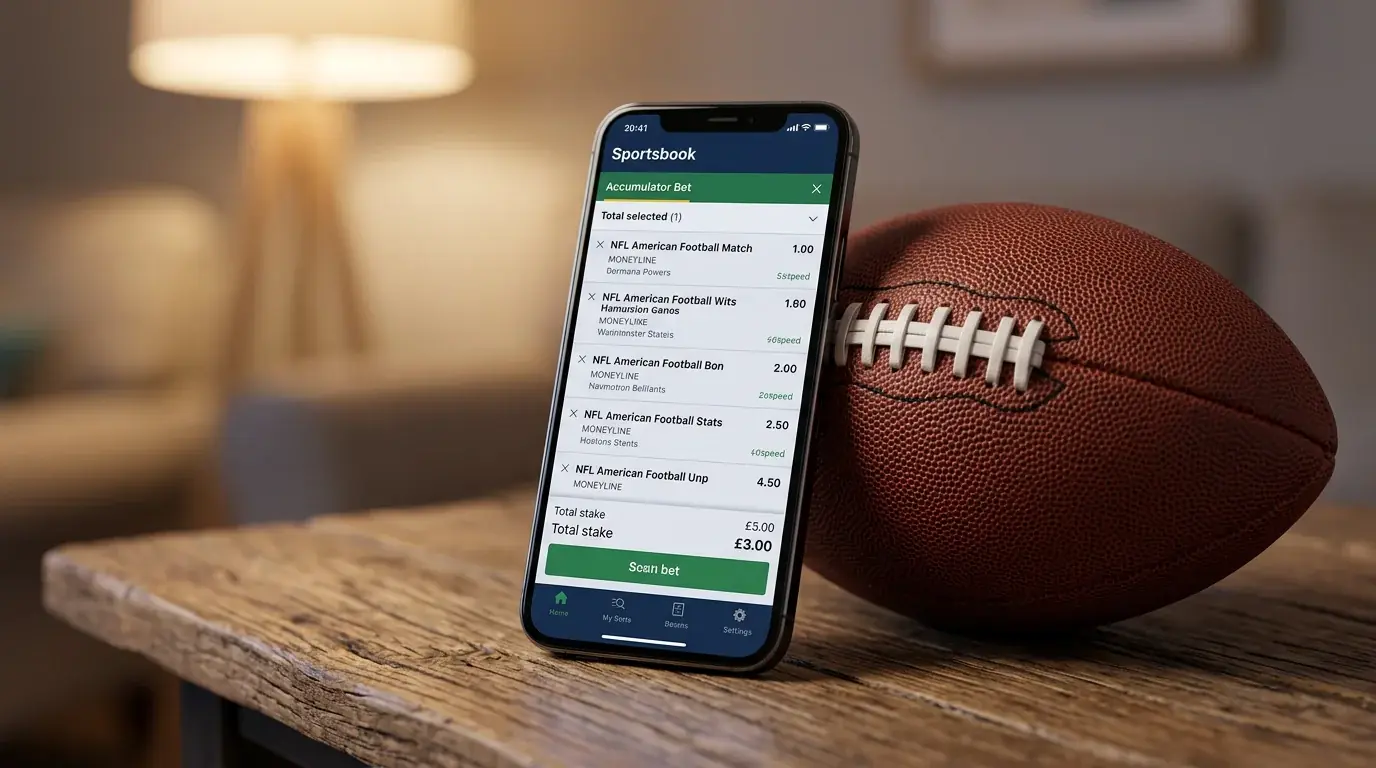
NFL Betting Market Types Explained for UK Punters
 Available in US
- What a market type actually is in NFL betting
- Moneyline: the simplest NFL bet and where its edge hides
- Handicap, point spread: the line that levels the contest
- Totals, over/under: betting on the score, not the winner
- Alternate spreads and totals: trading certainty for value
- Teasers and pleasers: shifting lines for combined wagers
- Futures: Super Bowl, conference and division markets
- Pushes, half-points and how stakes are returned
- Side-by-side: which market suits which punter profile
- Quick answers on NFL market types
What a market type actually is in NFL betting
The first time a friend asked me to explain NFL betting markets, I made a tactical error. I pulled up a sportsbook on my laptop, opened the page for a Sunday-night fixture, and watched his eyes glaze over as forty-eight different lines stared back at us. He was a Premier League punter who understood 1X2 and over/under 2.5 goals in his sleep. He was not prepared for spread betting, alternate handicaps, anytime touchdown scorers, and a dozen variations on a theme he had never seen before.
That was about six years into my career and I have repeated the lesson many times since: NFL is not a complicated sport to bet on, but it does not present itself the way British football does. The shape of the slip is different. The vocabulary is different. The way bookmakers price risk is different in ways that matter to your bankroll, not just your reading.
Before we talk about specific markets, let us define the term itself. A market type is the question the bookmaker is asking and pricing. “Who wins?” is one question. “By how much?” is another. “How many points combined?” is a third. Each generates its own market with its own odds and edge characteristics. The same NFL fixture can carry well over a hundred markets at a UK-licensed sportsbook on a busy week, and most of them collapse into a small number of underlying market types once you strip away the cosmetic differences.
That matters because UK remote betting GGY ran to 2.6 billion pounds in the most recent reporting year, and the share that flows through American football is rising fast on the back of the Sky Sports rights deal and the Paddy Power UK partnership. NFL traffic is no longer niche on British slips. By the end of this piece you should be able to look at a Sunday card, identify each market type at a glance, and know roughly what the bookmaker is charging you for the privilege.
Moneyline: the simplest NFL bet and where its edge hides
UK punters new to NFL almost always start with the moneyline, and they almost always end up frustrated by it. Not because the bet is hard to understand, but because it does not behave like a 1X2 football bet, even though it looks like one.
A moneyline bet is straight-up: you pick which team wins. There is no draw market because the NFL almost never produces a tie, and even when overtime ends level the bookmaker has a clear settlement rule. The complication is the price. Football moneyline prices on a roughly even fixture hover around 2.10 to 2.20 each side. NFL moneyline prices on a similar matchup look nothing like that, and the gap is where most beginners lose money before they understand why.
Take a Sunday afternoon fixture where one team is a slight favourite. The line might read minus 165 favourite, plus 140 underdog in American format, or roughly 1.61 and 2.40 in decimal. The favourite asks you to risk 1.65 to win 1.00. Now look at a heavier favourite. Minus 350, decimal 1.29. To win 100 pounds, you need to stake 350. To break even at that price you need the favourite to win nearly 78 percent of matches. The bookmaker is not giving you anything; the bookmaker is daring you to assume favourites win at the rate the price suggests.
NFL moneylines are unforgiving for one structural reason: scoring is volatile. A football match between Arsenal and Burnley might end 0-0. An NFL match between the strongest team in the conference and the weakest does not have that release valve. The implied probabilities you are paying for sit in awkward places, and the overround often runs between 4 and 6 percent on a moneyline two-way market.
Where does the moneyline edge actually hide? Three places, in my experience. The first is line-shopping between UK books on dog prices in close games. A two-cent gap between minus 110 and minus 105 sounds trivial until you compound it over a season. The second is the road-favourite trap, where UK books price road favourites a touch heavier than the underlying numbers justify because public money piles in on traditionally strong franchises. The third is divisional dogs in late-season fixtures, where motivation and familiarity flatten the talent gap and the price still reflects early-season power ratings.
None of that means moneyline is a beginner’s market. It means moneyline is brutally efficient most of the time and a quiet edge market in narrow circumstances. The biggest mistake I see is treating a 1.40 favourite as a safe bet. Even the best teams lose four or five regular-season games out of seventeen.
Handicap, point spread: the line that levels the contest
Mike, a regular reader who emails me about line moves, sent a one-line message during the second weekend of the 2025 season. “I bet the Vikings minus 7 and they won by 7. What just happened?” What just happened was a push, the line landed exactly on his number, and he got his stake back rather than his payout. The handicap market giveth and the handicap market refundeth.
Handicap betting, what American books call the point spread, is the dominant market type in NFL pricing. It is the line everyone refers to when they say “the Chiefs are minus 4”. The bookmaker sets a margin and asks whether the favourite wins by more than that margin or whether the underdog stays within it. If the spread is minus 6, the favourite needs to win by 7 or more to cover. The underdog wins your bet by losing by 5, by any margin under 6, or by winning outright. Both sides are usually priced around 1.91 in decimal, or 10/11 fractional, which is the standard “minus 110” hold books take on a balanced spread market.
This is the bit British punters who came from football need to internalise: the spread is not a prediction, it is a market-clearing device. The bookmaker is not saying the favourite will win by exactly 6. The bookmaker is saying 6 is the line at which roughly equal money will sit on each side. The number you see is the equilibrium price, not a forecast.
That distinction matters because it tells you what you are doing when you bet a spread. You are not picking the winner. You are picking which side of a piece of bookmaker arithmetic the final score will land on. Sky Sports’ Bryan Henderson has talked about the continual growth of the NFL in the UK, and one consequence of that growth has been more sophisticated UK pricing on spread markets. UK books used to lag US lines by half a point or a full point on most fixtures. That gap has narrowed considerably as Genius Sports data feeds and shared liquidity pools have pulled UK prices closer to the major US sharp books.
So how do you read a UK spread sensibly? Start with the half-point convention. A spread of minus 6.5 cannot push; a spread of minus 6 can. Books charge you for the certainty that minus 6.5 buys, usually fifteen to twenty cents of price. Buying off a key number is one of the most expensive things you can do on a UK NFL slip.
The second thing to read is the price either side. If the line is minus 6 with minus 110 each way, that is a balanced book. If you see minus 120 favourite and even-money dog, the next half-point shift is coming. Third, compare prices across at least three UK sportsbooks. The spread can be identical at three books while the price varies between minus 105, minus 110, and minus 115. That five-cent gap is the difference between a profitable spread bettor and a break-even one over a long sample.
One stylistic note for British readers: handicap and spread mean the same thing in the NFL context. UK books historically used “handicap” because it imported cleanly from horse racing and football. American books use “spread”. The mechanics are identical.
Why 3 and 7 are the key numbers in NFL spreads
The shortest answer to “why 3 and 7?” is “because field goals and touchdowns”. The longer answer is that the entire NFL scoring grammar is built around two units. A field goal is worth 3. A touchdown plus the standard extra point is worth 7. Almost every meaningful margin of victory is some combination of those two numbers, plus the occasional 8 from a two-point conversion or 6 from a missed extra point.
If you tally regular-season margins over the past decade and a half, the single most common margin is 3. A meaningful slice of NFL games end with a one-score difference, and a one-possession game where the winner kicked a late field goal is the modal outcome of the league. The number 7 is the second most common margin, and 6 sits not far behind. By the time you get to 4 or 5 the frequency drops sharply, because outcomes need to combine specific scoring events to land there.
This is why books charge a premium when you ask to buy a half-point off 3 or off 7. Moving from minus 3 to minus 2.5 sounds harmless. The bookmaker knows it is the difference between regularly pushing and regularly winning. The standard cost of that half-point at most UK books runs to around twenty-five cents in price terms, sometimes more if action is already heavy on the favourite. Around the secondary cluster of 6, 10 and 14 the cost is lower but still meaningful.
For deeper drilling into how key numbers reshape spread-shopping decisions and where the half-point hook costs the most, I have written about how key numbers move UK spread lines in more detail. For the purposes of this market-types tour, the takeaway is straightforward: the spread you see is rarely random. If a line is parked on 3 or on 7, the bookmaker is paying serious attention to it and so should you.
Totals, over/under: betting on the score, not the winner
Ask any UK sportsbook trader where the casual money goes during NFL Sunday and the answer comes back the same: overs. Punters love overs. The market knows it. The lines are priced accordingly. If you wanted a single instructive lesson about how books exploit recreational behaviour, watch a Sunday-night totals number drift up by a point and a half between the morning open and the eight o’clock kickoff.
The totals market, also called over/under or O/U, asks a different question. It does not care who wins. It cares about the combined final score of both teams. The bookmaker posts a number, say 47.5, and you bet whether the total points scored will go over or under it. The NFL totals range, in any given season, sits roughly between 36 at the lowest end and 56 at the highest, with most fixtures landing between 42 and 51.
What makes UK totals interesting is the layer of secondary markets the major books wrap around it. BetUK and several other licensed UK operators run a “17-plus Early Payout” mechanic on moneylines, where the bookmaker pays out your team-to-win bet if your team leads by 17 or more at any point in the match, even if they go on to lose. That product behaves like a totals hedge baked into a moneyline ticket, and it tells you something important: bookmakers are paying very close attention to scoring momentum, because that is where the recreational money is.
How should you read a totals line? First look at the number relative to the season’s pace. If the season’s average total sits around 45 and the line is posted at 49, the matchup either projects high-scoring or the market has absorbed weather, injury and pace data that nudge the number up. Second, check the price. A balanced totals market sits at minus 110 each way; if you see minus 120 on the over and even-money on the under, the public has been hammering overs and the book is taking a position. Third, watch the half-point movement. A line that has moved from 47 to 48 has crossed an important threshold; a line that has moved from 47.5 to 48.5 has not, in the same way, because both numbers carry a half-point cushion against pushes.
One more thing on totals. They run on the same scoring grammar as spreads, which means a late drive ending in a field goal can flip an under by 3 points. An interception returned for a touchdown can swing a total by 7 with no offensive snaps required. Totals reward punters who think about scoring distributions, not punters who think about who is “due” a high-scoring game.
Alternate spreads and totals: trading certainty for value
Imagine you are convinced a favourite is going to win comfortably but you do not love minus 6. The standard spread is too tight for your read. You want minus 3 instead, and you are willing to pay for it. That is the alternate market in one sentence: a menu of pre-set spreads and totals at adjusted prices, letting you trade certainty for value or value for certainty in either direction.
UK sportsbooks display alternate lines in a separate panel from the main spread. You will see something like minus 3 priced at minus 220, minus 6 at minus 110, minus 9 at plus 130, and minus 12 at plus 220. The bookmaker is offering you the full distribution of the favourite’s likely victory margins. The same mechanic exists on totals, with an alternate ladder showing over 44 at minus 200, over 47.5 at minus 110, over 51 at plus 140, and so on.
Where do alternates earn their keep? Two places, mostly. The first is when you have a strong directional read but limited interest in the standard line: betting minus 9 at plus 130 expresses that opinion at a price that compounds your bankroll faster than minus 6 at evens. The second is when you are building a multi-leg accumulator, where alternate lines tighten or loosen each leg, letting you tune the combined price to a place you actually want to play.
The trap with alternates is that the menu looks like opportunity. It is mostly a way to anchor your decision-making to a price the bookmaker has chosen to display. If you would not have bet minus 12 without the alternate panel, you should probably not bet it because the panel showed it to you. The price is precisely calibrated to the implied probability of the margin landing where you said it would, plus the bookmaker’s standard hold.
Teasers and pleasers: shifting lines for combined wagers
Teasers feel like a gift the first time you see one. Take two NFL fixtures, shift each spread by 6 points in your favour, combine them into a single bet, and collect a payout if both adjusted lines come in. What is the catch? The catch is the price, and the catch is the maths underneath the price.
Mechanically, a two-team teaser at 6 points lets you take a favourite of minus 7.5 down to minus 1.5, or push an underdog of plus 1.5 up to plus 7.5. Both teams need to cover the adjusted spread for the bet to win. UK books typically price a two-teamer around minus 110 to minus 120, depending on the lines. Three-team teasers pay around plus 160. Four-team teasers head into plus 250 territory and beyond.
The pleaser is the teaser’s evil twin. Same idea, opposite direction: the bookmaker shifts the line against you in exchange for a much bigger price. A two-team pleaser at 6 points might pay plus 600, with both shifted lines needing to come in. Pleasers exist in UK markets but rarely on the main pages — they are deep-menu bets aimed at punters who know exactly what they are doing, which usually means punters whose judgement is strong enough to ignore the temptation.
The reason teasers look attractive and often are not is the same reason key numbers exist. When you tease a favourite from minus 7.5 down to minus 1.5, you are crossing both 7 and 3 on the way down. Those are exactly the numbers most likely to be the final margin. That sounds great until you realise the bookmaker has priced exactly that benefit into the teaser cost.
If you are going to play teasers at all: keep them short, two or three teams. Stick to favourites between minus 7.5 and minus 9, where the cross-over-3-and-7 logic still has thin merit. Avoid teasing totals. A teaser is just a parlay with worse expected value in exchange for a wider safety margin.
Futures: Super Bowl, conference and division markets
I lost a futures bet on a Super Bowl winner once because the team I had backed in August traded their starting quarterback in October and went five-and-twelve. That is the central characteristic of the futures market: the price you bet today is the bookmaker’s read of an event that has months of intervening variance to navigate. You are not betting on a match. You are betting on the shape of a season.
Futures markets at UK sportsbooks cover everything from Super Bowl winner and conference champion down to division winners, regular-season win totals, individual awards, and post-season qualification yes/no. The headline market is always Super Bowl winner, with all 32 teams priced from the favourite, often around 5/1 to 6/1 fractional, down to the deepest underdogs at 200/1 or 500/1. American football accounted for around 34 percent of US sports betting handle in 2024, and a meaningful portion flows through futures, particularly in the four-week run-up to the season opener.
The fascinating thing about NFL futures pricing is how stable the favourites are relative to other sports. The same five or six franchises sit at the top of the Super Bowl board year after year, and the price spread between the top three and the next twenty is much wider than you might expect. That is partly the salary cap baking in roster continuity and partly the bookmakers respecting public money, which piles into recognisable franchises every August.
What you should think about with futures is the time value of your money and the tax position. UK punters pay no tax on winnings, which removes one US-style headache. But your stake is locked up for months. A 50-pound bet on a Super Bowl winner placed in August does not pay out, win or lose, until early February. If you make ten futures bets at fifty pounds each before the season starts, you have committed five hundred pounds of bankroll for half a year.
Three things are worth knowing about UK futures specifically. First, the prices on divisional winner markets are often where smarter money lives, because the bookmaker has less room to take a position with four teams to a division. Second, the conference championship market is structurally a “win three games in January” market, which correlates heavily with home-field advantage and bye-week status; watch what happens to AFC and NFC champion prices the moment regular-season seedings are confirmed. Third, the Super Bowl winner market reprices dramatically through the season, so a futures bet placed in August is a different bet by November even if the team has held up. You can hedge, you can cash out, or you can sit tight, and the right call depends on what your bankroll is doing.
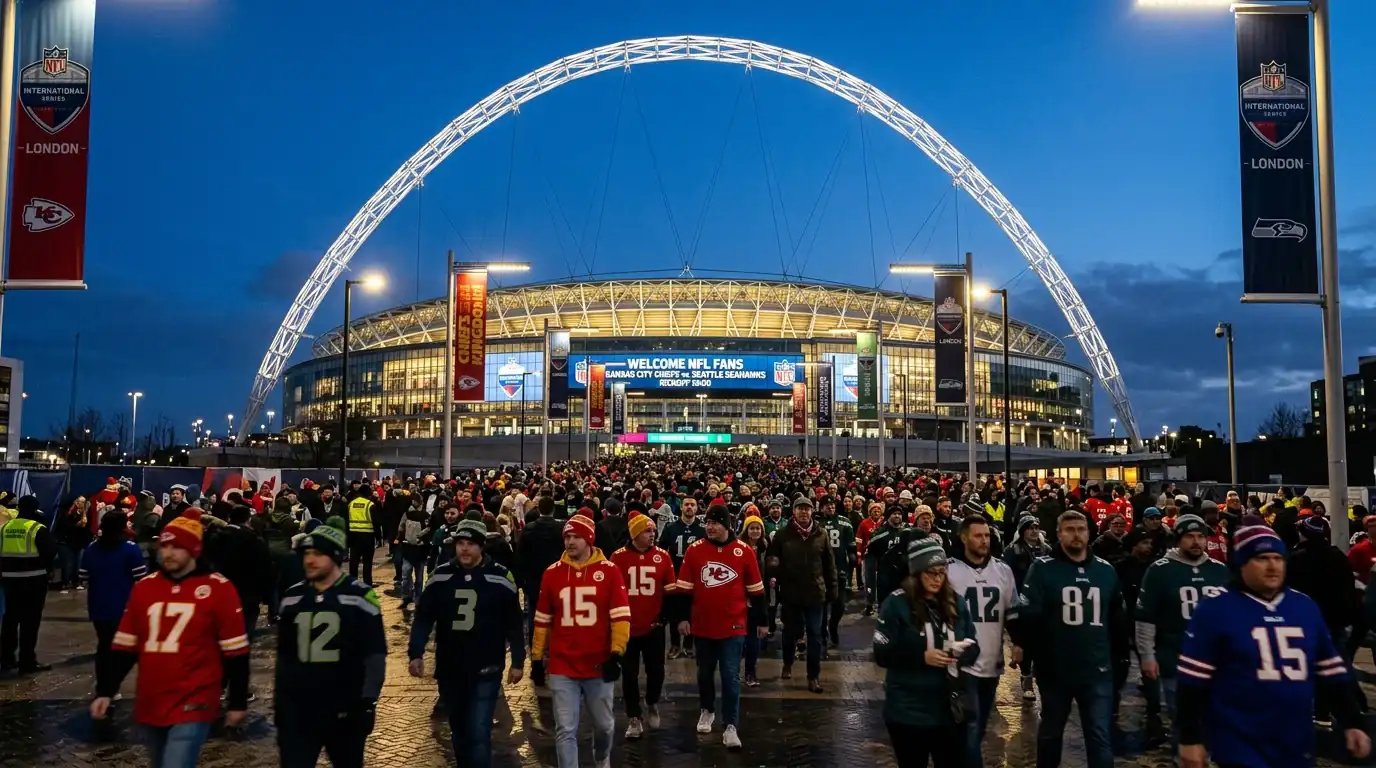
One curiosity for UK punters: London-based fixtures during the regular season can move futures prices in their own micro-cycle. The 2025 schedule put the Vikings in London in early October, the Jets and the Jaguars in subsequent fixtures, and several Super Bowl winner prices moved noticeably in those weeks. Whether that is sharp money or recreational money following the broadcast schedule, the pattern is real and you can sometimes catch the underlying value before the line stabilises.
Pushes, half-points and how stakes are returned
Push rules feel like rules-lawyering until the first time the line lands on your number. Then they feel like the most important paragraph in the entire bookmaker T&Cs page. Let me walk you through what actually happens to your stake when an NFL spread or total comes in dead-on the bookmaker’s line.
A push occurs when the final result lands exactly on the spread or total. If the spread is minus 6 and the favourite wins by exactly 6, both sides push. If the total is 47 and the combined score is exactly 47, over and under both push. UK sportsbooks settle pushes by returning your original stake. You do not win, you do not lose, and the bookmaker keeps no margin on the bet at all.
That is the headline rule. The detail is where things get interesting. UK books almost universally use full-point or half-point lines, which means push outcomes are mathematically possible only on the full-point lines. A spread of minus 6.5 cannot push, because a margin of 6.5 is impossible. A spread of minus 6 can push, and roughly 4 to 6 percent of NFL games end on a margin that creates a push on a full-point spread, depending on key-number proximity. Half-point lines are how the bookmaker eliminates push risk in exchange for a slightly worse price for you. If the standard spread is minus 6 at minus 110, the half-point alternate of minus 6.5 might come in at minus 125. You are paying about fifteen cents to remove the chance of getting your stake back.
One thing UK punters miss is what happens to a push inside a multi-leg accumulator. If you have a four-team acca and one leg pushes, most UK books reduce the acca to a three-team bet at the corresponding shorter price. Your other three legs still need to come in, but the push leg simply drops out and the price recalculates. That treatment is standard at the major UK books, but a small minority of operators settle the entire acca as a loss if any leg pushes. Knowing your book’s push rule before placing a multi-leg bet is one of those small details that pays for itself.
Side-by-side: which market suits which punter profile
After seven seasons of fielding “which market should I bet?” questions from friends, family and the occasional stranger at a Super Bowl party, I have learned that the answer depends less on the markets and more on the punter. Here is how I match markets to profiles.
The Sunday-morning casual punter, who watches one or two games a week and wants their stake to live or die on something they can follow, is well served by moneyline on close fixtures and totals on offence-heavy matchups. Both resolve cleanly on the scoreboard, you do not need to track key-number geometry, and the bets stay engaging for the full sixty minutes. The trade-off is that moneyline favours pay short and totals carry the public-money bias I described earlier.
The data-led punter, who reads injury reports and tracks line moves through the week, gets the most out of the spread market. Spreads are where the actionable value tends to live in NFL because every variable that affects the matchup, from offensive line health to weather to the rest differential between teams, gets priced into a single number. The price is usually balanced, the hold is predictable, and the half-point and key-number geometry is learnable.
The volume punter, who places multiple bets per slate and treats NFL betting as a season-long position, usually ends up living in the alternate-spread and totals markets. Alternates let you sharpen or flatten directional reads to match your conviction level, which is what bankroll-aware punters need when they are sizing across many fixtures.
The futures punter is making a different kind of bet entirely: a season-long capital commitment where the underlying skill is roster evaluation and schedule analysis. If you do not enjoy that kind of off-season homework, do not bet futures. Teasers and pleasers are niche markets at best for most UK punters, and if you are placing a teaser more than once or twice a season you are probably overusing the market.
One last frame, and it is the most useful one I know. Pick a market type per fixture, not a market per slip. The instinct, especially for newer punters, is to scan a fixture and place three or four bets across moneyline, spread, totals and props. That spreads risk on paper but stacks correlated exposure in practice, because all four markets reflect the same underlying matchup view. Pick the market that best expresses the read you have, size your stake to that single bet, and let the slip stay clean.
Quick answers on NFL market types
What is a push in NFL spread betting?
A push is when the final result lands exactly on the bookmaker’s spread or total. Your stake is returned in full, neither winning nor losing. UK books only allow pushes on full-point lines such as minus 6 or 47; half-point lines like minus 6.5 or 47.5 are mathematically push-proof. In a multi-leg accumulator, a pushed leg usually drops out and the acca recalculates to the remaining legs at the shorter combined price.
Are alternate NFL lines available at every UK sportsbook?
Most major UK-licensed sportsbooks offer alternate spreads and totals on the headline Sunday and Monday-night fixtures, but coverage thins out for Thursday-night and London Games at smaller books. If your usual sportsbook does not display an alternate ladder for a particular fixture, the bookmaker has typically decided that liquidity is too thin to price the full menu. Line-shop across two or three UK books before placing on alternates, since the price gaps can be wider than on standard spreads.
How do NFL teaser bets work in the UK?
A teaser combines two or more NFL bets into one slip, with the bookmaker shifting each spread or total in your favour by a fixed margin, usually 6 points. All teased lines must come in for the bet to win. UK books typically price a two-team 6-point teaser around minus 110, with three-team and four-team versions paying significantly more. Teasers look generous because they cross key numbers like 3 and 7, but the bookmaker prices that benefit into the teaser cost, so they offer thinner expected value than they appear to.
Created by the ”nfl Betting Markets” editorial team.