NFL Line Shopping in the UK: How to Find the Best Price Across Operators
 Available in US
Last December I bet a Buffalo Bills moneyline at -135. The same line was -150 at one of the books I do not have an account with. I did not know about the better price until after the game. The Bills won. My £100 stake returned £174 instead of the £167 I would have had at the worse line. Seven pounds. That was one bet. Multiply that across an NFL season and line shopping is not a polite optimisation. It is the difference between break-even and profitable for any UK NFL bettor working with realistic edges.
The Account Mix That Makes Shopping Worth Doing
Line shopping only works if you actually have accounts at the books you want to compare. The single biggest practical mistake I see UK NFL bettors make is committing to one operator for everything because the sign-up bonus was attractive at the start of their journey. Twelve months later they are still betting at the same book, getting the same lines, and pretending the original new-customer offer somehow compensates for a season of suboptimal pricing.
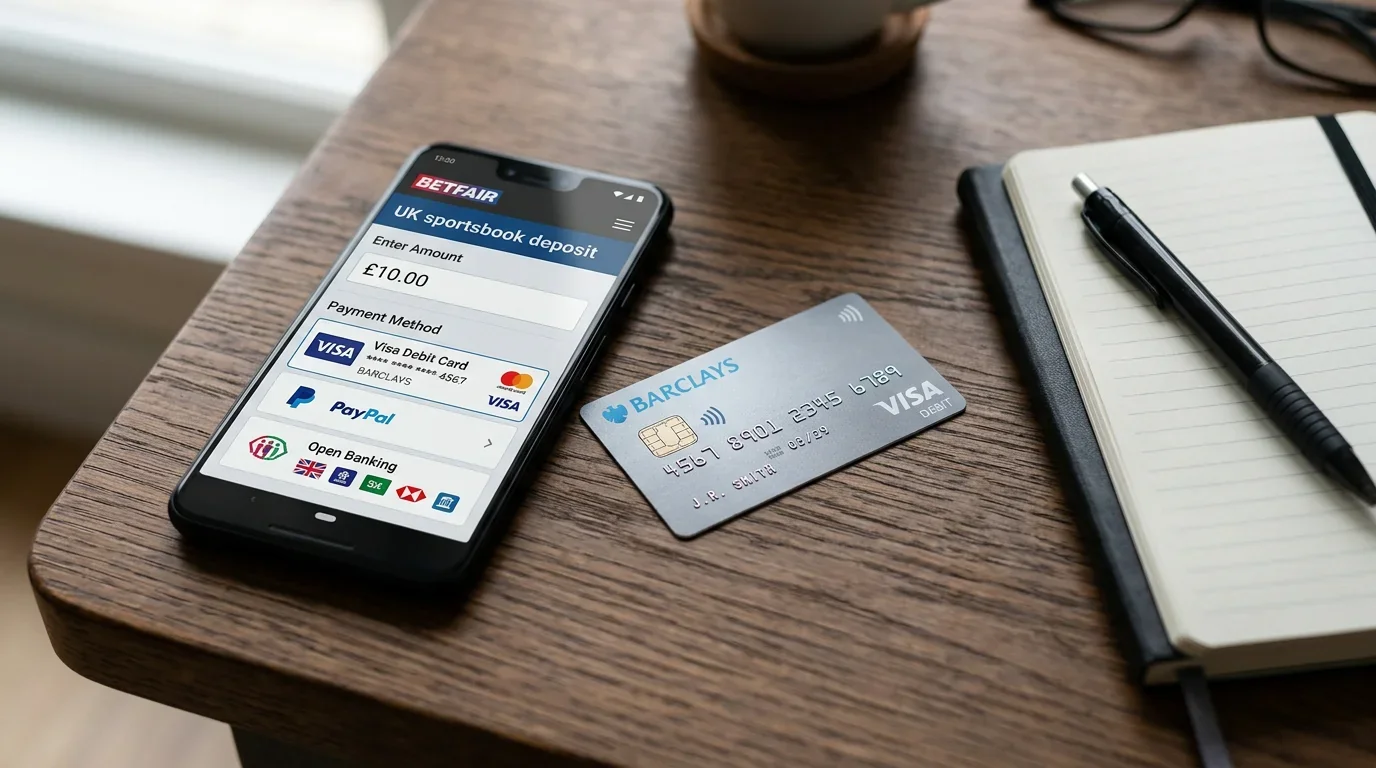
My standing recommendation for a serious UK NFL bettor is between three and five active accounts at UK Gambling Commission-licensed operators. Three is the minimum that gives you meaningful price comparison. Five is the practical ceiling before account management becomes its own administrative burden. The accounts should span at least one major UK retail brand, one international book with strong NFL pricing, and one exchange where back-and-lay liquidity allows you to circumvent fixed-odds pricing on the highest-volume markets.
UK remote betting GGY across all sports landed at roughly £2.6 billion in the most recent reporting period, with NFL representing a small but rapidly growing share of the cross-border flow into UK-licensed books. That growth has translated into more competitive NFL pricing as operators chase the audience, which means line shopping is more rewarding now than it was three years ago. The spread between the best and worst line on a given NFL fixture is wider than it has ever been in the UK market.
One important caveat: line shopping is legitimate, legal and explicitly permitted by the UKGC’s licensing framework. There is no rule against having multiple accounts at multiple licensed operators. The constraint that does apply – particularly for bettors who consistently take advantageous prices – is each operator’s right to limit or restrict winning customers. That is a separate operational reality I will return to later in this piece.
Live Odds Feeds and How to Use Them Without Drowning
The mechanics of line shopping have changed in the past five years because real-time odds feeds and aggregator screens are now widely available. The instinct of a new bettor is to open every screen at once and stare at a wall of numbers. That instinct is wrong. The bettor who tries to monitor twelve operators across sixteen markets simultaneously will end up missing the line moves that matter and chasing the noise that does not.
The framework I use is much simpler. Before kick-off, I have my position list – the four or five markets I genuinely want to bet. For each market I check three operators and the exchange. I record the best available price. If the price has moved by more than a tick from my model’s projection I reassess whether the bet is still on. If the price is within range, I stake at the best line and move on. The whole process takes around fifteen minutes for a typical Sunday slate.
What I deliberately do not do is monitor markets I have no intention of betting. Watching a screen of numbers because the data is there is the surest way to talk yourself into bets you should not be making. The discipline of line shopping is not finding more bets; it is finding better prices on the bets you have already decided to make.
The In-Play Shopping Window That Most Bettors Miss
Live and in-play markets accounted for 62.35% of online sports betting share in 2025, and the in-play environment is where line shopping discipline gets tested hardest. Pre-match line shopping can be done methodically. In-play line shopping happens in the seconds between a play ending and the price re-posting. If you are going to trade in-play with any real volume, you need at least two operators open simultaneously and a clear pre-defined rule for which one you go to first.
The in-play discrepancies that matter most appear in the moments immediately after a major event – a turnover, a long touchdown, a key injury. Different operators reprice at different speeds. The slower book sometimes offers a price that no longer reflects the underlying probability for thirty to ninety seconds. Those windows are where the in-play line shopping edge actually lives. The bettor who has only one app open misses them entirely.
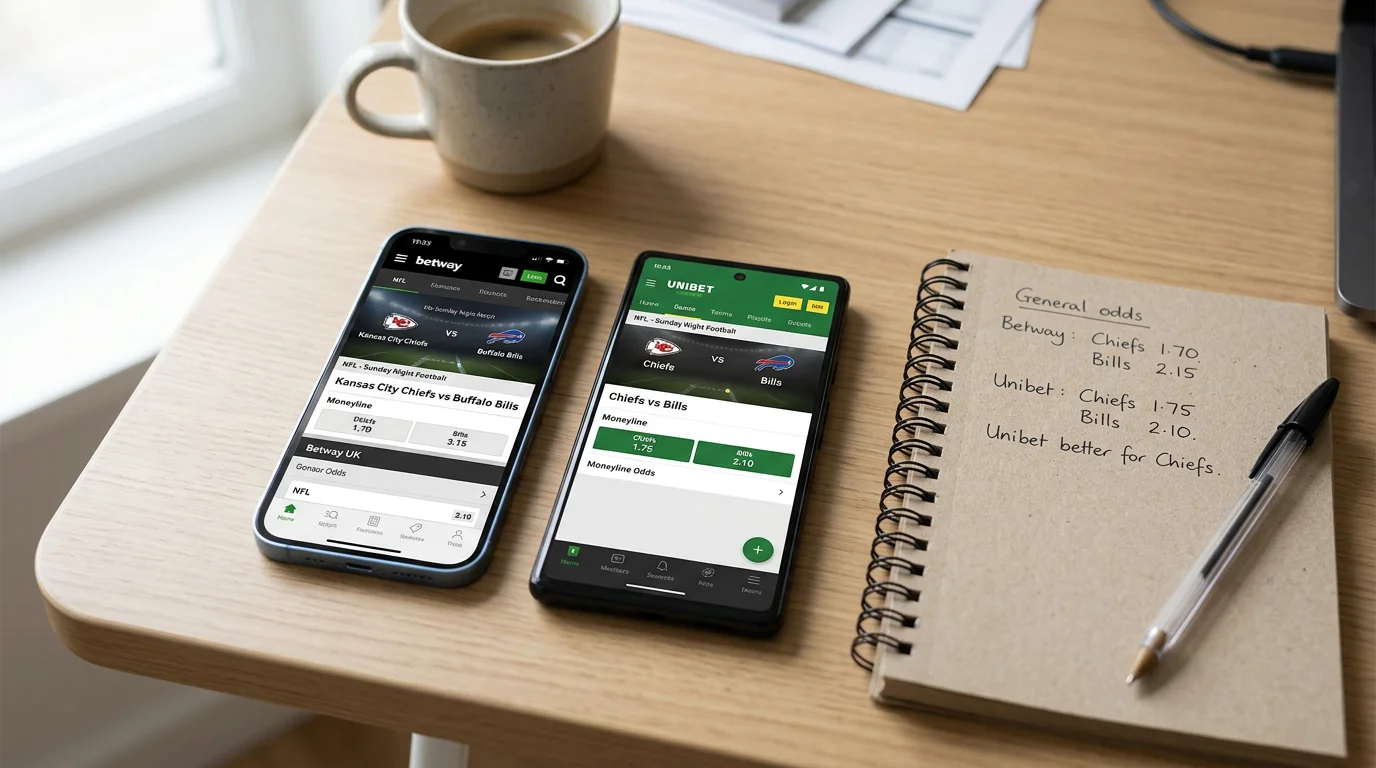
The mechanical setup that works for me on a Sunday is two phones with different apps loaded, plus the exchange open on a laptop. The phones serve fixed-odds books with different repricing latencies. The exchange serves the back-and-lay markets where market depth produces tight spreads on the most-traded propositions. That is more hardware than most casual bettors will want to deploy. For the volume I trade it is the minimum that makes line shopping in-play worthwhile.
The Restriction Reality Every UK Line Shopper Faces
The uncomfortable truth about line shopping is that the operators on the other side of the trade are not passive participants. UK-licensed books reserve the right to limit, restrict or close accounts at their commercial discretion, and bettors who consistently take advantageous prices on early-released lines tend to be limited within months rather than years. This is not a hypothetical risk. It is the operational backdrop against which any serious line shopping career plays out.
The practical responses that work are mixed bet patterns, varied stakes, and avoiding the obvious behavioural signatures of pure value-hunting. A bettor who only ever bets early-released lines, only ever takes the highest-priced option, and only ever stakes at the maximum the book will accept gets limited fast. A bettor whose pattern includes some recreational mid-week parlays, some moderate stakes on mainline markets, and some losses gets limited slower.
The exchanges sit outside this restriction logic because their commercial model is fundamentally different. An exchange charges commission on net winnings rather than building margin into the price, so a winning bettor on an exchange is a paying customer rather than a problem. For UK NFL line shoppers who expect to be limited at fixed-odds books over time, building a primary relationship with an exchange is an obvious medium-term strategy.
One factor that ties into both restriction risk and bankroll strategy is how aggressively you manage stakes when comparing multiple lines. The trade-off between maximum stake at a marginal price advantage versus a smaller stake at a stable account is a question I cover in more detail within the dedicated UK NFL bankroll management framework, where the staking decision is treated separately from the line selection decision.
What to Track and What to Ignore
The metric that matters most for line shoppers is closing line value. CLV is the comparison between the price you took on a bet and the closing line for that market – the final available price before kick-off. A bettor who consistently beats the closing line by 2 to 3% across hundreds of NFL bets is genuinely sharp regardless of short-term win rate. A bettor whose CLV is flat or negative is paying retail and getting recreational results.
Tracking CLV across multiple operators is the only way to know whether your line shopping process is actually working. The spreadsheet I keep records the operator, the line taken, the closing line at the same operator, and the closing line at the best alternative operator. Three columns. Recorded for every bet. The data tells me, after a season, which operators are sharpening their NFL lines fastest, which ones are lagging, and whether my own line selection is genuinely beating the market or merely feeling like it is.
What I deliberately ignore is short-term win rate. A great line shopper can lose fifteen out of twenty NFL bets and still be running ahead of expectation if those bets all closed at worse prices than the lines taken. A poor line shopper can win ten in a row at flat prices and be running below expectation. CLV separates skill from variance in a way no other metric does, and any bettor serious about line shopping needs to internalise that distinction early.
The Edge That Compounds Across a Season
Line shopping is the most boring topic in NFL betting and the one with the most measurable financial return. A bettor who consistently extracts an extra 2% on every wager through disciplined line comparison is a bettor whose annual returns are 2% higher than an otherwise identical bettor at the same operator. Across a £10,000 staking volume in a season, that is £200 of additional return for no incremental risk.
The reason most UK NFL bettors do not line shop is friction. Opening multiple apps, comparing prices, recording results – none of it is fun, and most of it is invisible during the session. The reason the bettors who do line shop maintain their edge is that the friction is exactly what keeps the casual market from competing with them. The same friction that makes line shopping unappealing to most punters is the friction that protects the financial return for the punters willing to do it.
If you take one practical step from this piece, make it the simplest one: open accounts at three UK-licensed operators, install all three apps on your phone, and check all three before placing any NFL bet for the next four weekends. Track the prices. After a month you will see clearly whether the operator you have been using by default has been giving you the best price or whether you have been quietly leaving money on the table. The answer is almost always the latter.
Is line shopping at multiple UK operators legal?
Yes. Holding accounts at multiple UK Gambling Commission-licensed operators and choosing the best available price for each wager is legal, common and explicitly permitted under UK regulation. The activity itself does not contravene any operator’s standard terms either. The practical constraint is that operators retain commercial discretion to limit or close accounts of customers they classify as unprofitable, which is a separate matter from the legality of holding multiple accounts. Building a line shopping process that is durable over multiple seasons therefore involves managing this restriction risk alongside the price comparison itself.
How many operator accounts does a UK NFL bettor actually need?
Three accounts is the practical minimum for meaningful line comparison. Five accounts is around the upper bound where account management remains operationally manageable. The mix should ideally include at least one major UK retail brand, one international operator with competitive NFL pricing, and one betting exchange where commission-based pricing can sometimes outperform fixed-odds books on heavily traded markets. More than five accounts produces diminishing returns relative to the time required to maintain them.
Prepared by the nfl Betting Markets editorial staff.